Why are metal fabrication companies under-automated?
Metal fabrication has lagged automotive in automation. Here's why — and what's changing.

If you walk into a typical metal fabrication shop, you'll find some automation — laser cutting, press brakes, a CNC machine or two — but the manual labour content is still high. Welding, finishing, deburring, and grinding are mostly done by hand. Compared to automotive, the sector is decades behind.
Why fabrication has lagged
Three structural reasons, each on its own:
- High mix, low volume. A typical fabrication shop runs thousands of part variants in small batches. The per-variant programming cost makes conventional automation uneconomic.
- Custom fixturing burden. Each new variant needs new fixtures, which adds cost and lead time.
- Skill availability. Robot programmers are hard to hire, and small shops can't justify a full-time integration engineer.
The combined effect has been that automation lands on a few well-suited applications (laser cutting, repeatable press work) but stops at the welding bay door.
What's changing now
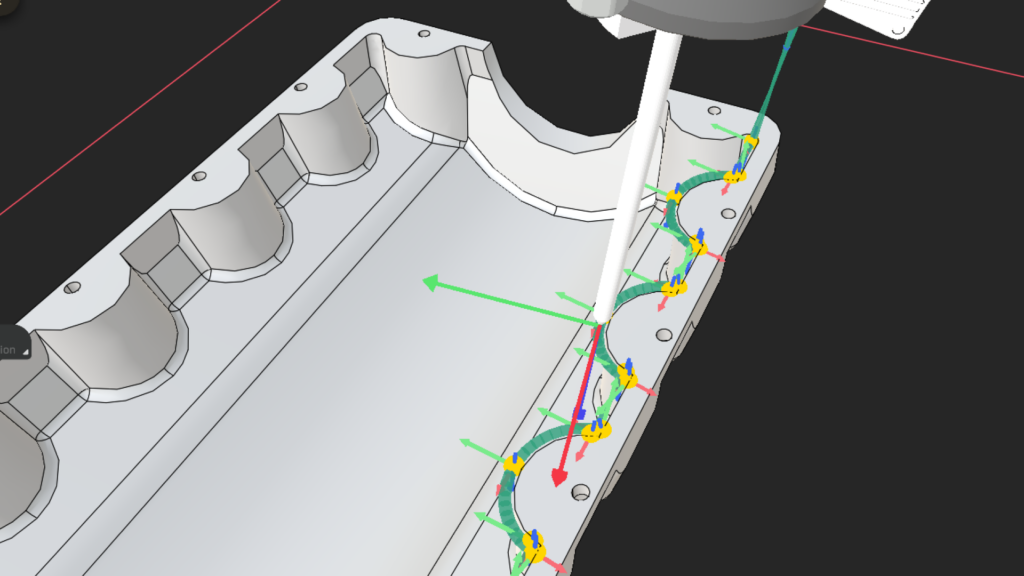
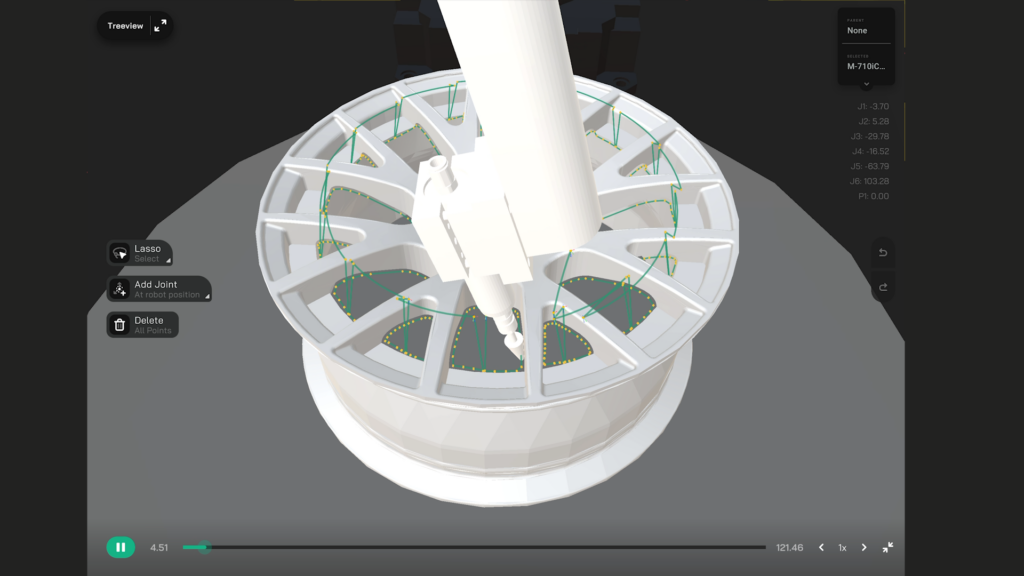
The newest generation of adaptive, no-code robotic platforms is built specifically for this gap. The platform value proposition is simple: programming time drops to near zero per variant, and fixturing tolerance loosens because the robot scans the part rather than relying on it being in a precise position.
For fabricators, that combination changes the economics. Cells become viable for batch sizes that would have been laughably small for conventional automation. Operators run multiple cells instead of one. The total automation footprint expands.
Where to start
If you're a fabricator considering automation for the first time, the highest-ROI starting points are usually welding or deburring on parts that you already make in some volume but vary frequently. The platform investment pays back fastest in those exact conditions.