What is robotic welding? Exploring the future of automated welding
How robotic welding works, where it shines, and what's next for the technology.
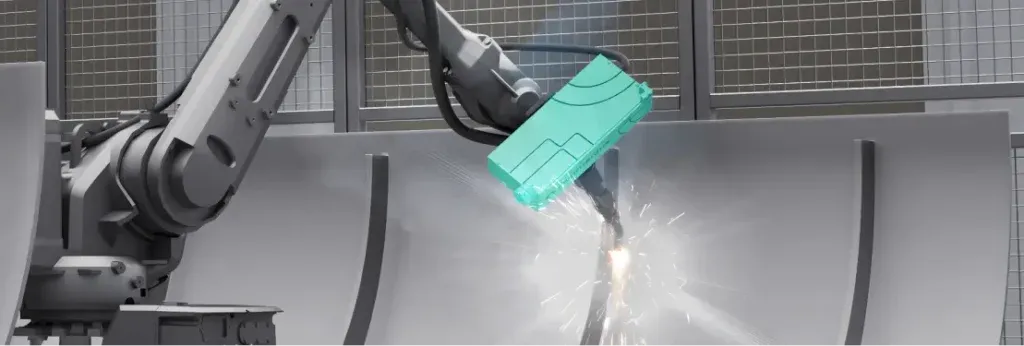
Robotic welding uses a programmable robot — typically a six-axis industrial arm — to perform welding tasks. The robot holds the torch, follows a programmed path, and applies the weld with consistent speed, angle, and standoff. Done well, the result is faster, more consistent, and safer than manual welding.
How it actually works
A robotic welding cell is typically built around:
- The robot arm with welding torch attached.
- The power source and wire feeder that drives the welding process.
- Fixturing that holds the part in a known position.
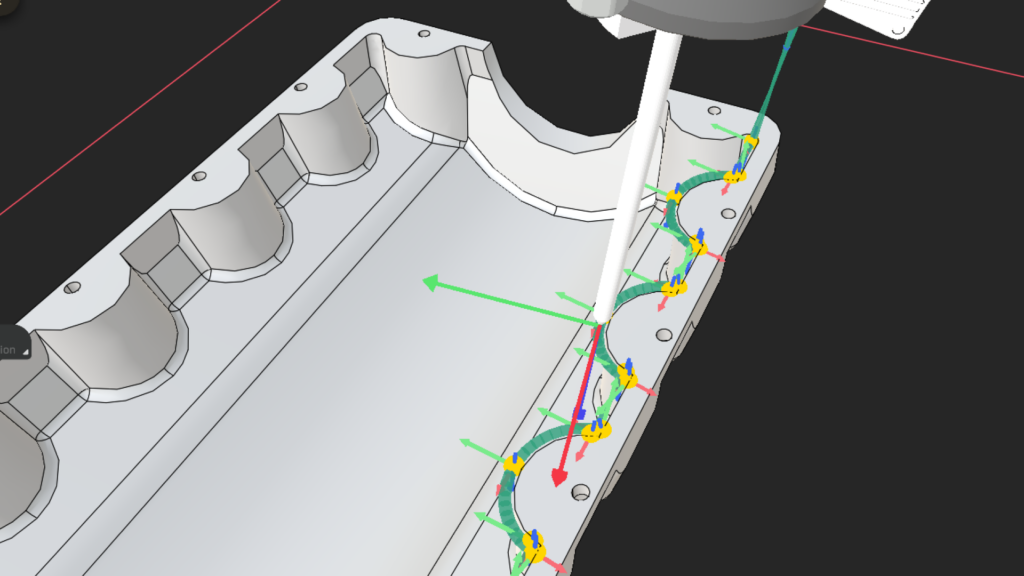
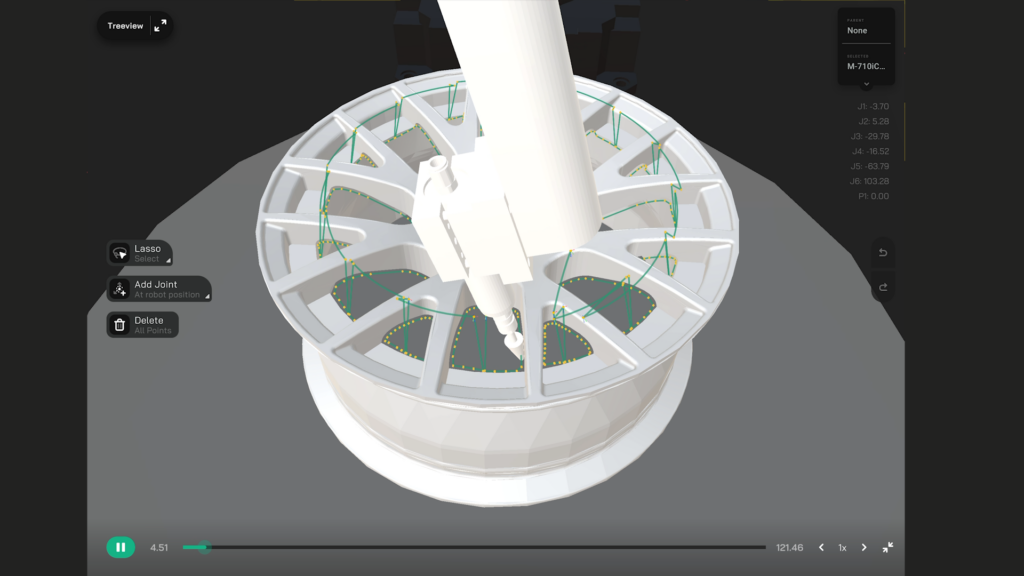
- A programming method — pendant, OLP, or scan-driven.
- Vision and sensor systems for joint location and seam tracking.
The robot executes the welding path while the auxiliary systems handle process control: arc voltage, wire feed speed, shielding gas flow.
The five common robotic welding processes
Five welding processes account for most robotic welding work:
- MIG (GMAW) — the dominant method in factory welding.
- TIG (GTAW) — for stainless, aluminium, and exotic alloys.
- Flux-cored (FCAW) — for heavy-section steel.
- Spot welding — for joining sheet metal.
- Laser welding — for precision joints in high-end manufacturing.
What's next: vision-guided welding
The historical limit on robotic welding has been programming and fixturing. Every variant needs programming time, and every weld needs precise fixturing.
Vision-guided robotic welding eliminates both bottlenecks. The cell scans the actual part, locates the joint, generates the path, and adapts during execution. Augmentus' platform delivers this for fabrication shops, automotive suppliers, and heavy-equipment manufacturers — exactly the customers who've been priced out of conventional welding automation.