Welding robots: solving the part deviation problem
Why part deviation kills traditional welding cells, and how adaptive sensing fixes it.

If you've operated a robotic welding cell, you know the symptom: the robot followed the program exactly, and the weld still came out wrong. The cause, almost always, is part deviation — the actual part diverged from the geometry the program assumed.
Where part deviation comes from
Several places, often at once:
- Upstream tolerances. Plates, tubes, and weldments arrive within tolerance but not at the CAD ideal.
- Fixture drift. Fixtures shift over a shift, parts settle, clamps loosen.
- Thermal distortion. As the part heats during welding, it warps. Later welds in the sequence start from a different geometry than earlier ones.
- Fixturing accuracy limits. Most fixturing can't position a part to better than half a millimetre — enough to spoil a critical fillet.
The result is welds that miss the joint, undercut, overlap, or fail inspection.
The traditional solution: more fixturing
The conventional response has been to invest more in fixturing — tighter tolerances, more clamps, more references. That works to a point, but it gets expensive and brittle. Every new variant needs new fixturing.
The better solution: adaptive sensing
Modern welding cells use vision or seam tracking to find the actual joint before welding and to correct the path during welding. The robot adjusts to the part it actually has, not the part the program assumed.
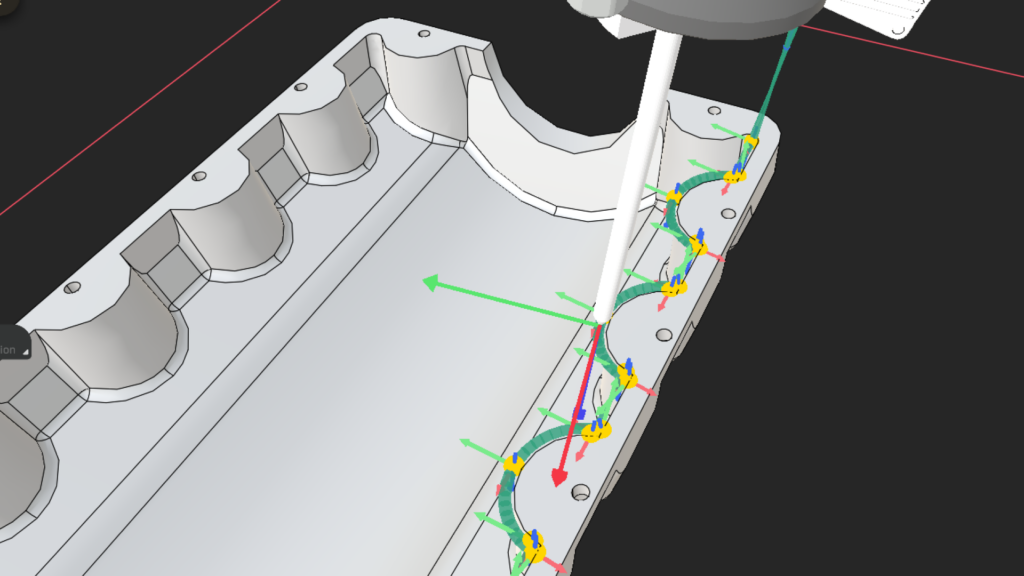
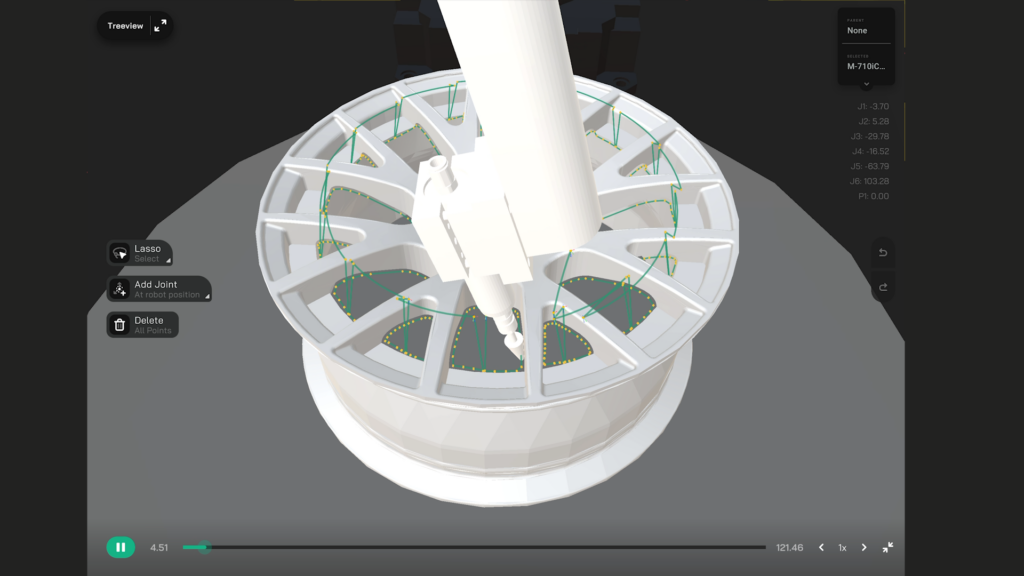
Augmentus' platform combines this with scan-driven path generation. The cell scans the part, generates the path against the real geometry, and adapts at execution. Part deviation stops being a problem because the system never relied on the part matching the CAD ideal in the first place.