Your A to Z guide to manufacturing, robotics, and automation terms
A short reference of the terms you'll hit most often when scoping robotic automation.

Robotic automation has its own vocabulary, and that vocabulary multiplies once you start scoping a real deployment. This is a short reference of the terms that come up most often in conversations with manufacturers.
The terms that matter most
A handful are worth knowing well, because they're load-bearing in any automation discussion:
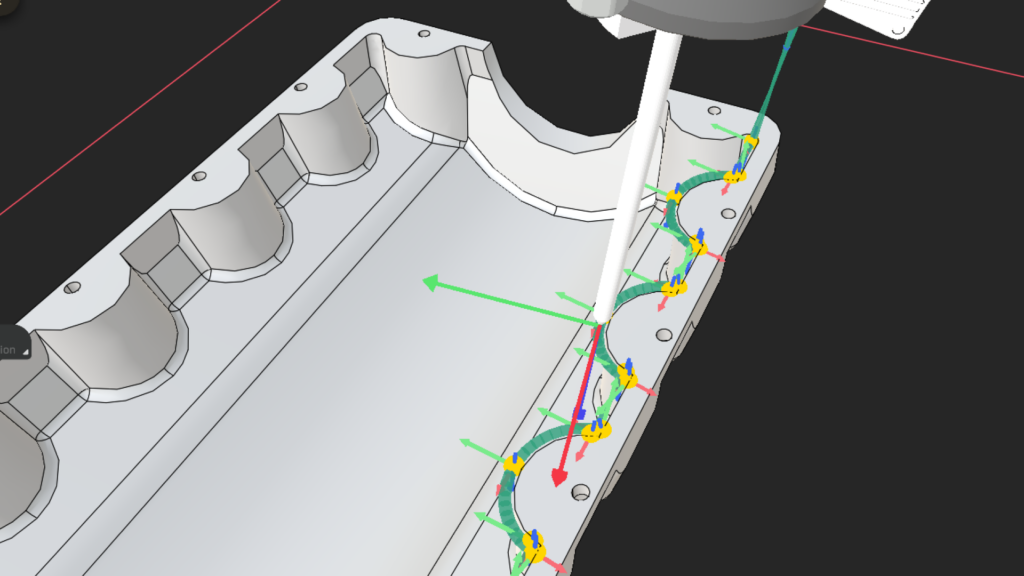
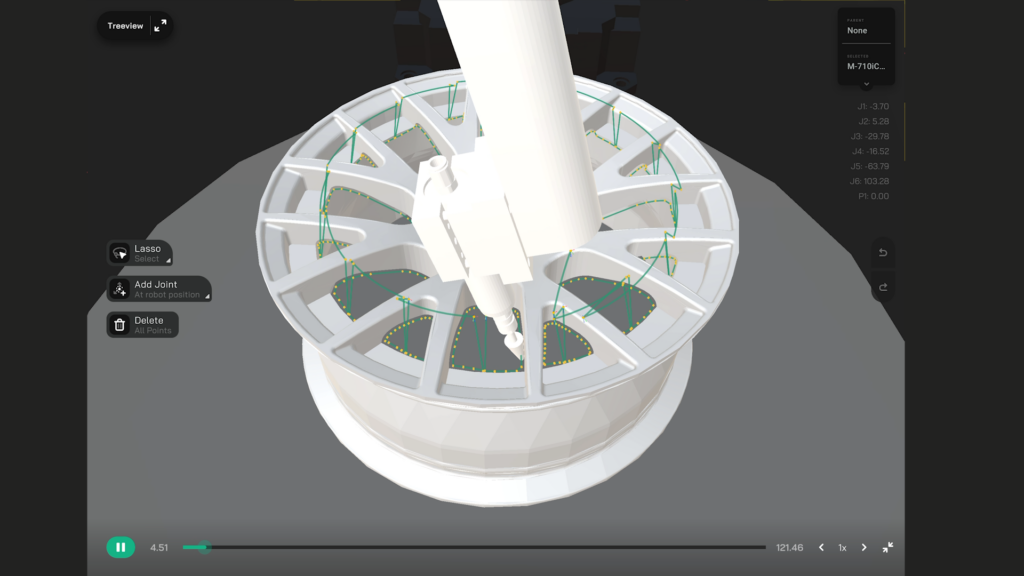
- Digital twin — a software model of a physical cell, used for simulation and planning.
- End effector — the tool at the end of the arm: torch, spray gun, gripper.
- HMLV (High-Mix, Low Volume) — the manufacturing pattern that breaks conventional automation and rewards adaptive systems.
- No-code programming — generating robot programs without writing controller-native code.
- Offline programming (OLP) — preparing robot programs in software before deployment.
- Part deviation — the divergence of an actual part from its CAD spec.
- Seam tracking — sensor-based correction of welding paths during execution.
- Teach pendant — the hand-held controller used to drive the robot through waypoints manually.
- Vision system — a camera-based perception system that lets the robot see parts and the workspace.
- Waypoint — a position the robot is programmed to reach.
How the terms fit together
The big shift in industrial robotics over the last five years has been from open-loop systems — driven by pre-recorded waypoints — to closed-loop, perception-driven systems that use vision and adaptation. Most of the vocabulary above maps onto that shift. The terms that come up most in modern deployments are the ones that describe perception and adaptation.
Where to go from here
If you're new to robotic automation, the most useful exercise is to look at your own process and identify which terms describe what's happening in it. The terms you use most are the ones whose tools you'll spend the most time evaluating.