Thermal spraying: revolutionising coating with robotic technologies
How robotic thermal spraying is changing coating quality, consistency, and operator safety.
Thermal spraying applies functional coatings — wear-resistant, corrosion-resistant, thermally insulating — by heating or melting feedstock material and depositing it onto a part surface. It's used heavily in automotive, aerospace, and energy industries. And it's been one of the slowest processes to automate well.
What makes thermal spraying hard
Three things:
- Coating consistency depends on tight control of standoff, traverse speed, and angle. Small variations show up as porosity, adhesion loss, or thickness inconsistency.
- Operator exposure is significant. Thermal spray booths involve heat, fumes, and high-velocity media.
- Geometry sensitivity. Many of the parts that need thermal spray have complex curved surfaces that are hard to program for.
What robotic thermal spraying changes
A robotic thermal spray cell pairs a robot — usually an industrial arm with reach and stiffness — with the spray torch and feedstock system. The robot follows a programmed path with consistent standoff and traverse. Two big benefits:
- Coating quality improves measurably. Consistent traverse and standoff produce coatings that meet aerospace specs without rework.
- Operator exposure drops. Humans stay out of the booth during operation.
Where Augmentus fits
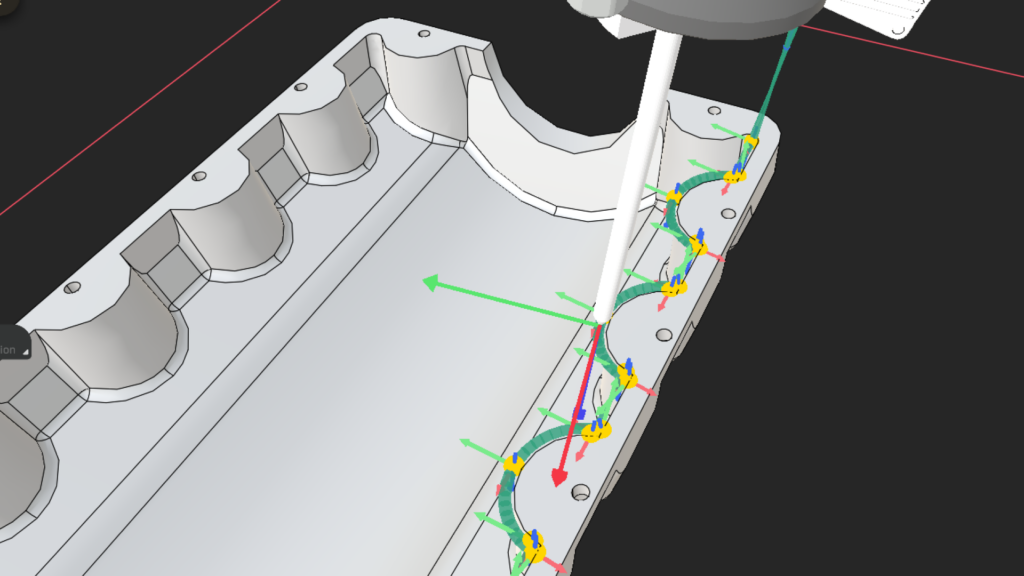
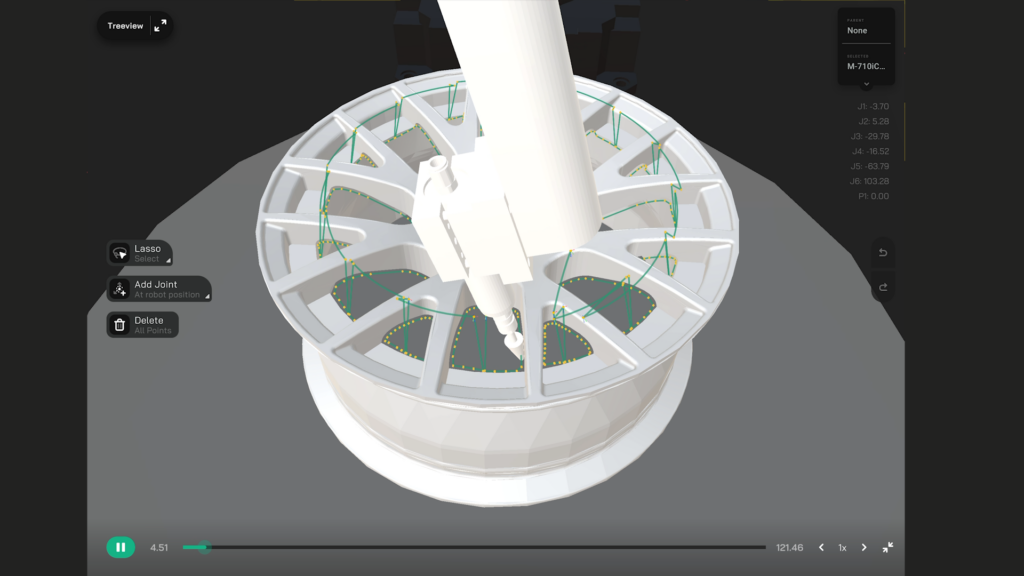
The remaining hurdle is programming. Augmentus' platform handles complex curved geometry by scanning the actual part, generating the spray path from the captured surface, and deploying. Vision-guided adaptation handles part deviation at execution. The platform has been deployed on aerospace blade coatings, turbine repair, and engine component coatings.