The true cost of teach-pendant programming in high-mix manufacturing
Why the headline labour cost is the smallest part of what teach-pendant programming actually costs your shop.
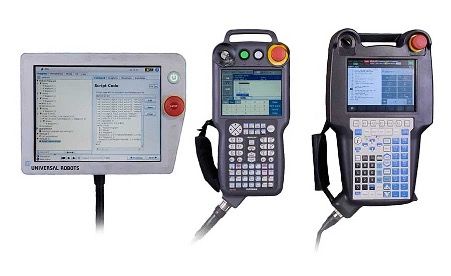
Teach-pendant programming is usually treated as a fixed, low-cost line item: a programmer's hourly rate times the hours spent teaching a part. Talk to anyone who actually runs a high-mix line and they'll tell you that's not even close to the real cost.
This paper unpacks the hidden costs of teach-pendant programming at high mix, and how the picture changes when you start counting the costs nobody puts on the invoice.
What the invoice shows
A programmer's labour cost — typically a few hundred to a few thousand dollars per SKU depending on geometry and complexity. This is the cost that most automation business cases use, and it's the cost that makes teach-pendant programming look defensible.
What the invoice misses
Three categories of cost rarely show up on the line item:
Production downtime. The robot can't run production while it's being taught. For a cell that would otherwise be producing during those days, the opportunity cost is the value of the parts not made. On expensive cells running expensive parts, this can hit a million dollars or more per SKU per year in lost throughput.
Re-teaching when parts drift. Fixtures wear, parts vary, tools drift. Every teach has a half-life. Re-teach cycles consume the same downtime as the original teach but happen every few weeks, not once per SKU.
Throughput cap on mix. Most under-counted of all: the existence of teach-pendant programming sets an upper limit on how many SKUs a cell can economically run. SKUs that would be profitable at zero programming cost stay manual or off the line entirely. This isn't a cost on a specific part — it's the cost of every part you didn't make because programming made them uneconomic.
What the math looks like
In our analysis of high-complexity, high-mix manufacturing — aerospace MRO, custom finishing, valve coating, surface treatment — the combined opportunity cost from production downtime can exceed three million dollars per robot per year versus a scan-driven cell.
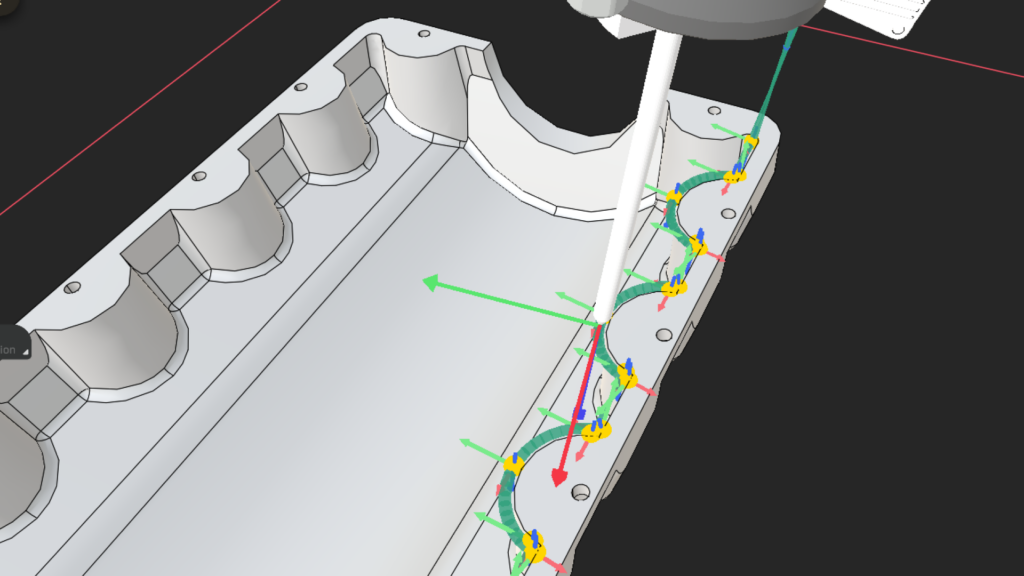
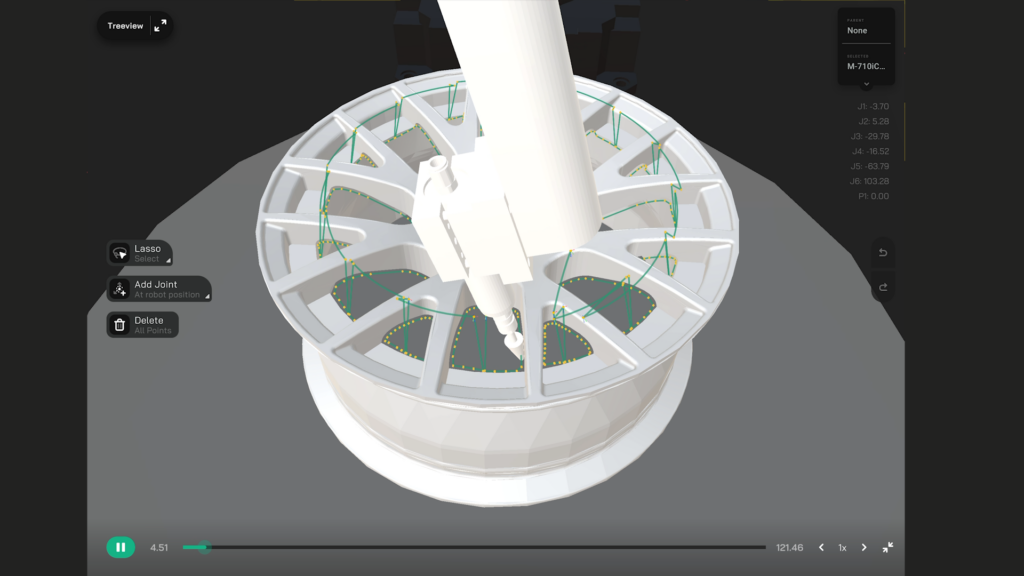
The platform-level answer is to replace teach-pendant programming with scan-driven path generation. The recipe stays constant; the toolpath regenerates per part. Onboarding time drops from days to minutes, re-teach cycles disappear, and the mix ceiling lifts.
To work the math on your specific cell, schedule a demo.