The revolution of robotic shot peening
Shot peening was overdue for automation. Here's why robotics is finally taking it on.
Shot peening is a surface treatment process that uses high-velocity media — typically steel or ceramic shot — to introduce compressive stress into a part. It's critical for fatigue-sensitive components: turbine blades, landing gear, gears, springs. The process improves fatigue life by 30 to 100 percent in many cases.
It is also exactly the kind of work that nobody wants to do manually.
Why peening needs automation
Three things make manual shot peening a constant operational headache:
- Hazardous environment. Operators wear full PPE for shifts at a time. The shot media is loud, abrasive, and exhausting to control.
- Strict quality control. Coverage and intensity have to be uniform across the part — visual inspection and Almen strips are mandatory.
- Workforce shortage. Recruiting peening operators has been progressively harder for at least a decade.
Robots eliminate the operator exposure and apply the shot with consistent coverage, intensity, and timing.
The historical wall: programming
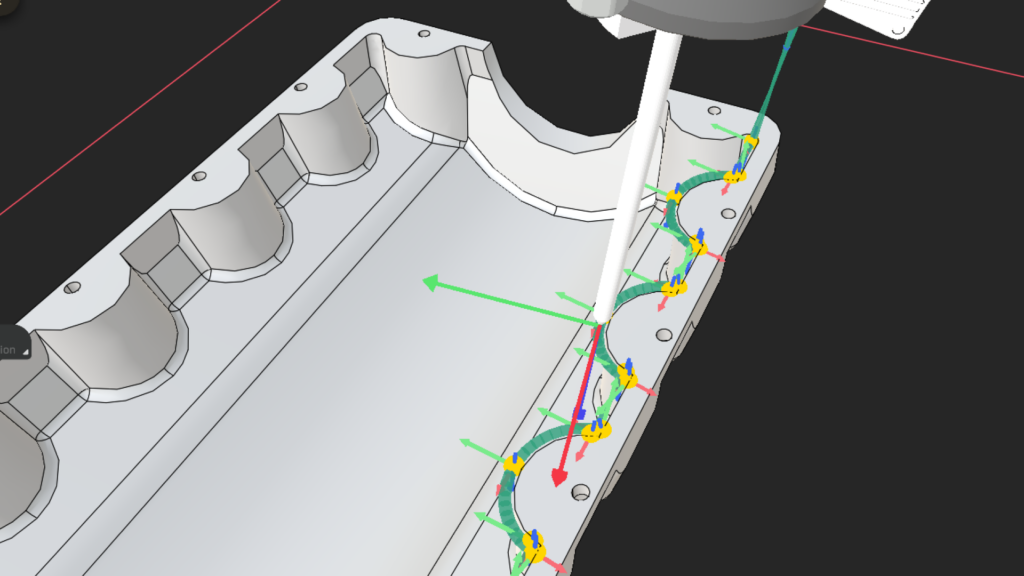
Until recently, the wall was programming. Every new part variant required reprogramming, and shot peening is often done on parts that come in irregular geometries — repair work, MRO, low-volume aerospace components. The programming cost ate into the ROI.
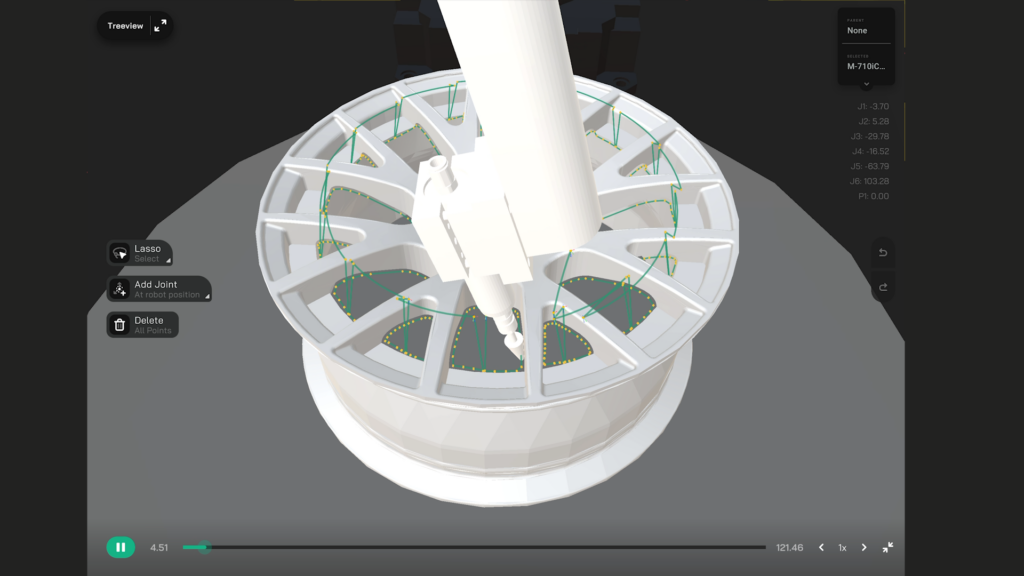
No-code platforms remove the wall. A 3D scan generates the peening path, and the cell executes it. New variants don't need an engineer. Augmentus has deployed adaptive peening for aerospace MRO and turbine repair customers exactly on this basis.