Surface finishing: process types, methods, and technologies
A practical guide to the surface finishing processes that matter most — and where robots are changing them.

Surface finishing is the last step before a part leaves the shop, and it's often what decides whether the part ships at all. Recalls in the automotive industry trace disproportionately to surface defects. Aerospace certifications hinge on coating thickness and adhesion. Even in consumer goods, the visible finish is what the customer judges.
Six processes that dominate
Most industrial surface finishing falls into six categories:
- Polishing and buffing — for cosmetic finish.
- Sanding and grinding — material removal and surface preparation.
- Sandblasting and shot peening — texture, prep, or compressive surface treatment.
- Coating application — paint, gelcoat, powder, thermal spray.
- Plating and anodising — electrochemical surface modification.
- Deburring and chamfering — edge treatment after machining.
Each has its own equipment, operator skill profile, and quality control regime.
Where automation has historically struggled
Surface finishing was slow to automate because of geometry. The work needs consistent tool contact across surfaces that vary part-to-part. Pendant-taught cells can't keep up with high-mix work. OLP cells need precise CAD models. Both fall back to humans when the part doesn't match expectations.
The shift to perception-driven systems
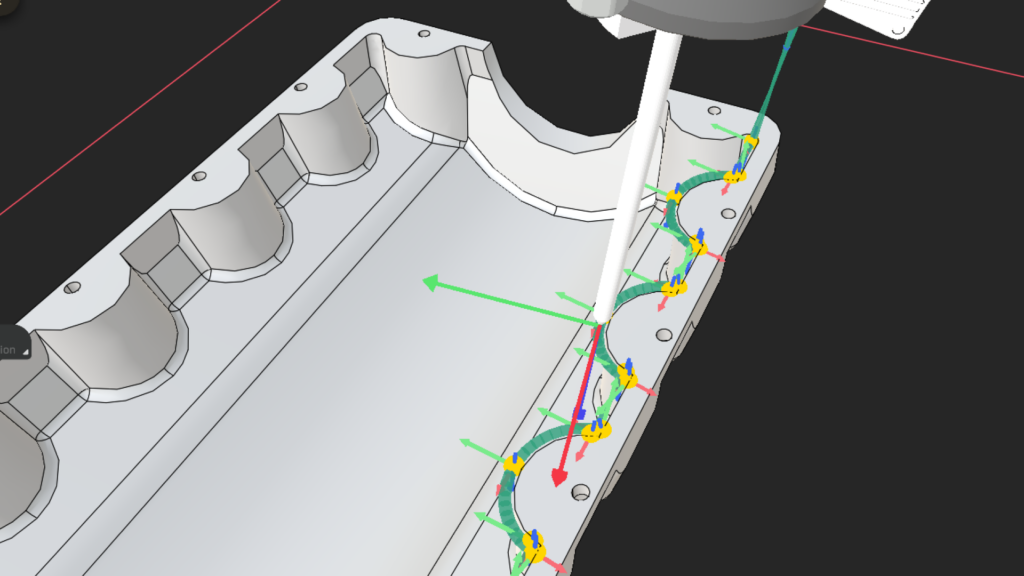
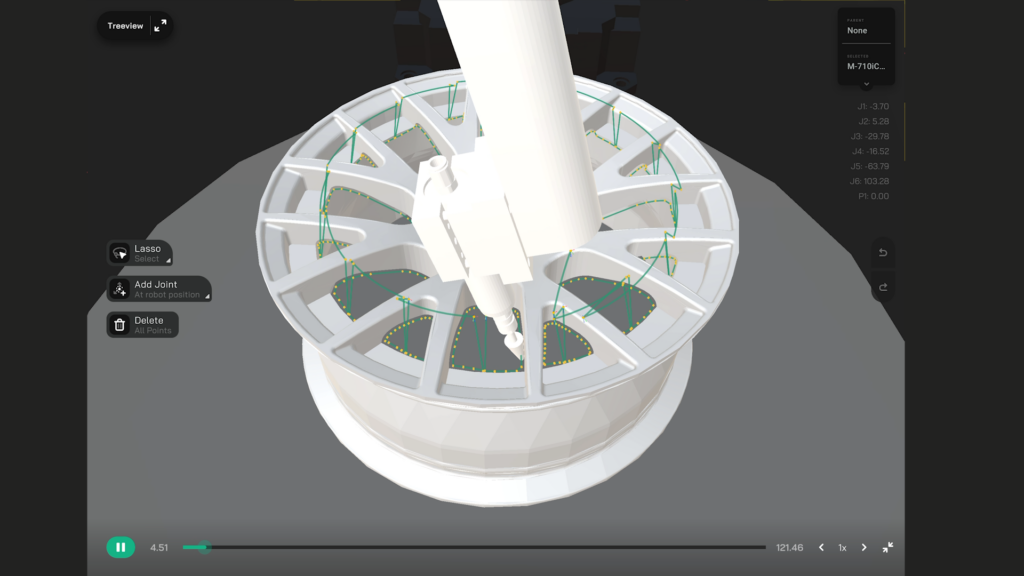
Modern adaptive robotic platforms — Augmentus among them — pair 3D scanning with no-code path generation. The cell sees the actual part, generates the path from real geometry, and executes. Surface finishing is one of the strongest applications because the work is so geometry-dependent.
For shops running mixed batches of finishing work, the platform investment typically pays back within a year through eliminated programming and reduced operator exposure.