Laser profilers vs structured-light scanners for robotic programming
Picking the right 3D vision system for industrial automation — where each technology wins and where it falls down.
Every scan-driven robotic cell begins with the same question: which 3D sensor does the geometry capture? The two dominant choices for industrial use are laser profilers (line-scan triangulation) and structured-light scanners (full-field projection). They sound similar; they solve very different problems.
Laser profilers
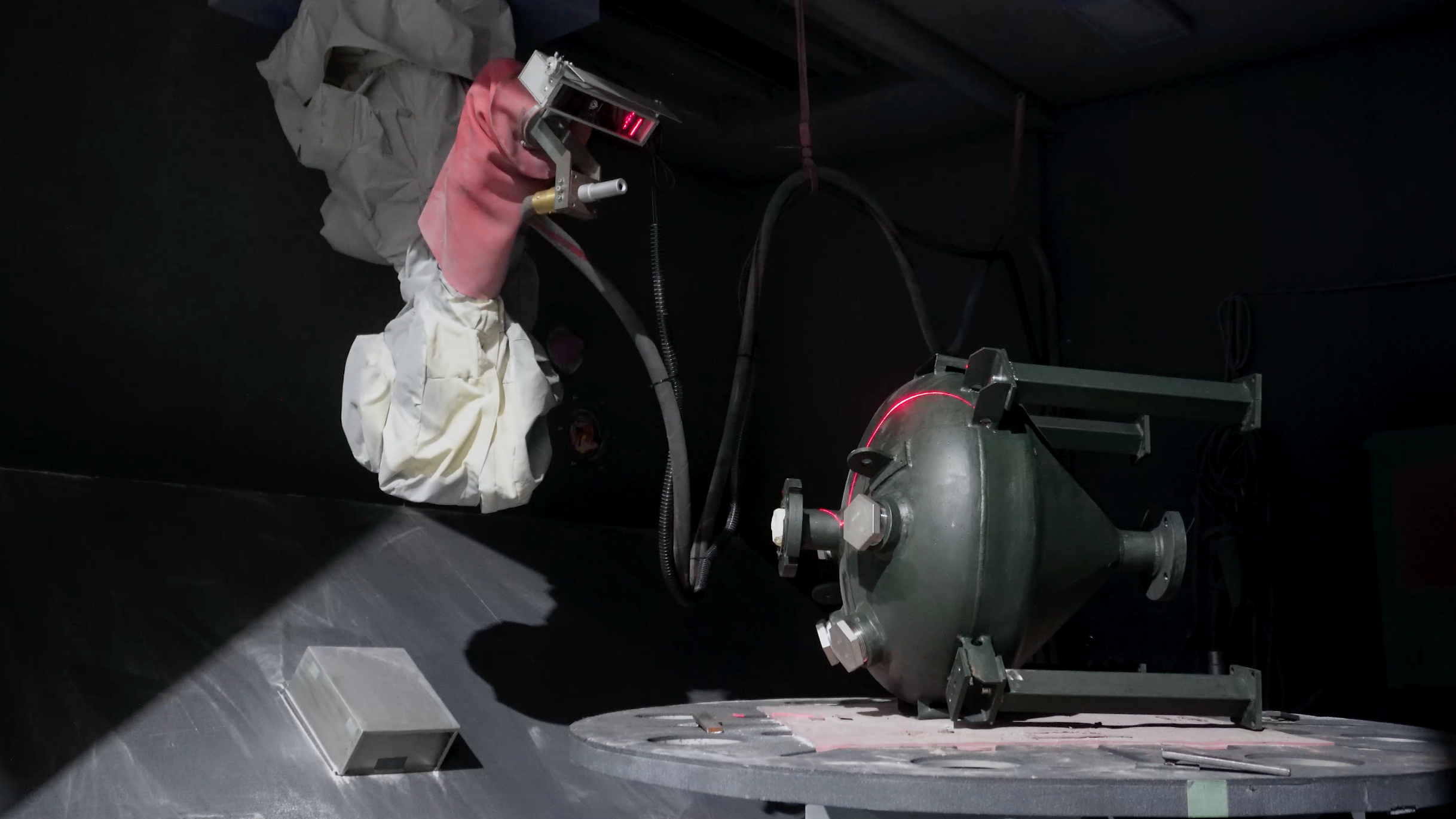
Laser profilers project a single laser line onto the part and triangulate the reflection through a calibrated camera. To capture a part, the profiler — or the part — has to move so the line sweeps across the surface.
Profilers are the right answer for dynamic shopfloor environments: shops with variable ambient lighting, large parts that won't fit in a scanning enclosure, or in-line scanning where the part is already moving. They tolerate vibration and dirt well, and they produce extremely high-fidelity scans on the geometries they can reach.
The trade-off is scan time. A line scanner must sweep the entire surface, and complex geometries (deep features, occluded faces) demand multi-pass strategies that take longer.
Structured-light scanners
Structured-light scanners project a patterned image (usually a series of fringes) onto the part and reconstruct depth from how the pattern deforms across the surface. The whole field-of-view is captured at once, which makes scans much faster per frame.
Structured light is the right answer for controlled environments: enclosed scanning booths, predictable lighting, and parts small enough to fit the projector's calibrated volume. The fast frame rate is decisive when cycle-time is dominated by scanning.
The trade-off is environmental sensitivity. Ambient light, reflective or dark surfaces, and vibration all degrade structured-light reconstruction faster than they degrade a laser profiler.
Where Augmentus sits
The Augmentus platform is sensor-agnostic — the same scan-to-path workflow runs against profiler-captured meshes and structured-light meshes alike. What matters downstream is that the mesh is dense enough and metrically accurate; the choice of sensor is a question of cell environment and cycle requirements, not platform compatibility.
If you'd like help picking the right sensor for your cell, schedule a demo and we'll talk through the geometry and the environment.