How painting robots are changing industrial coating
Where robotic painting fits, what kinds of robots win, and how to deploy one well.

Industrial painting was one of the first manufacturing processes to take robotics seriously. Automotive paint shops have run robots since the 1980s, and aerospace coatings, white-goods finishing, and architectural cladding have followed since. The drivers are simple: consistency, throughput, and operator health.
What painting robots actually do
A painting robot holds the spray gun, moves through a programmed path with consistent standoff and angle, and applies coating with much tighter control than a human can sustain across a shift. The robot doesn't get tired, doesn't drift, and doesn't breathe in solvents.
Three kinds dominate:
- 6-axis articulated arms for general-purpose paint work.
- Hollow-wrist spray robots with internal paint and air feeds for cleaner motion.
- Cobot-based painting cells for smaller shops where shared workspace matters.
Where the field is moving
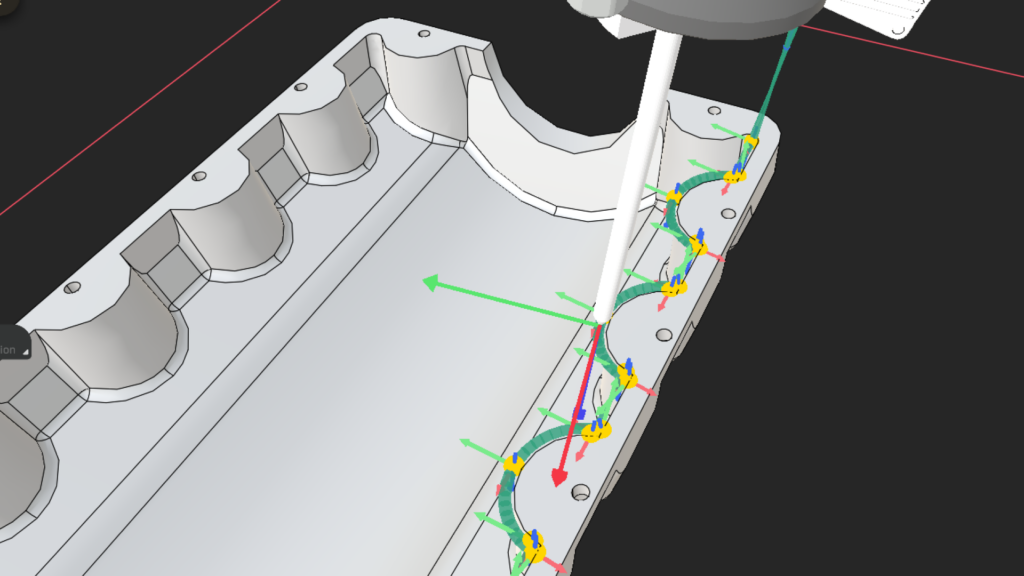
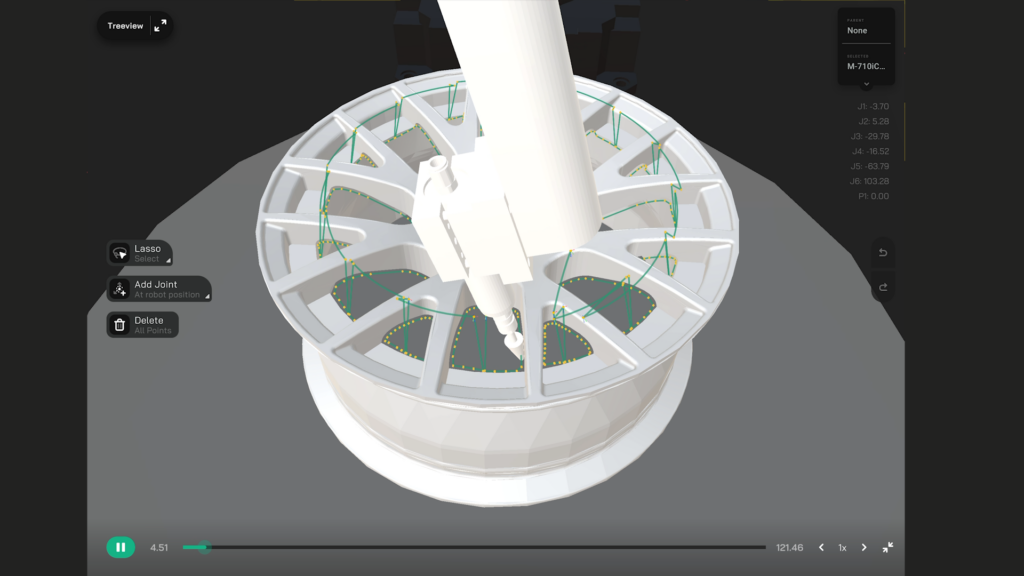
The next frontier is adaptive painting. Traditional paint cells assume the part is presented in a known, fixtured position. Modern adaptive systems scan the actual part and adjust the path to match. That capability unlocks high-mix paint work — small batches, varied geometry — that conventional cells can't justify.
Augmentus' platform sits on this layer. Scan-driven path generation produces complete paint programs from real part geometry, with vision-guided adaptation correcting at execution time.