A guide to offline programming (OLP) in robotics
How OLP works, what it costs, and where scan-driven generation is taking it next.

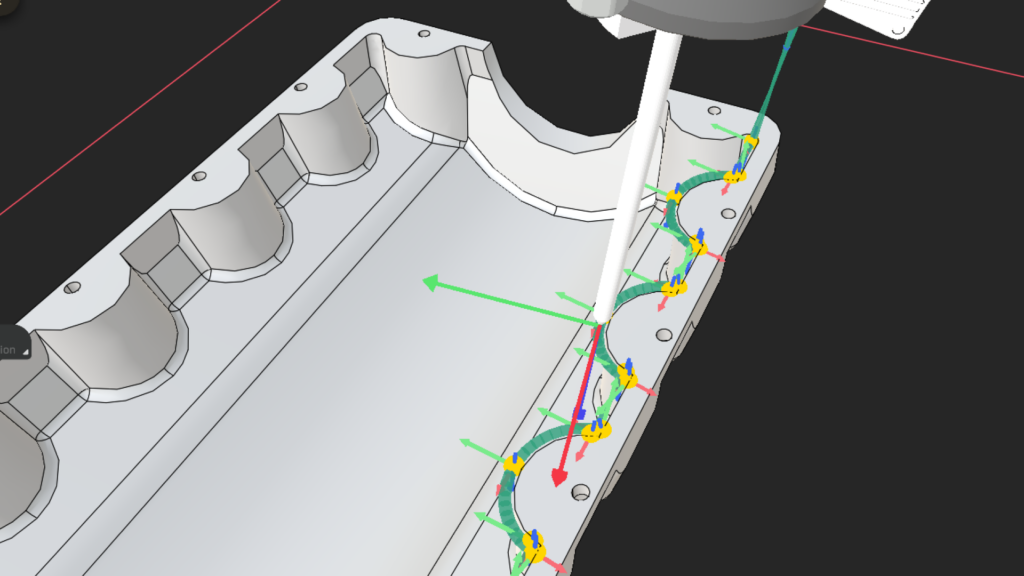
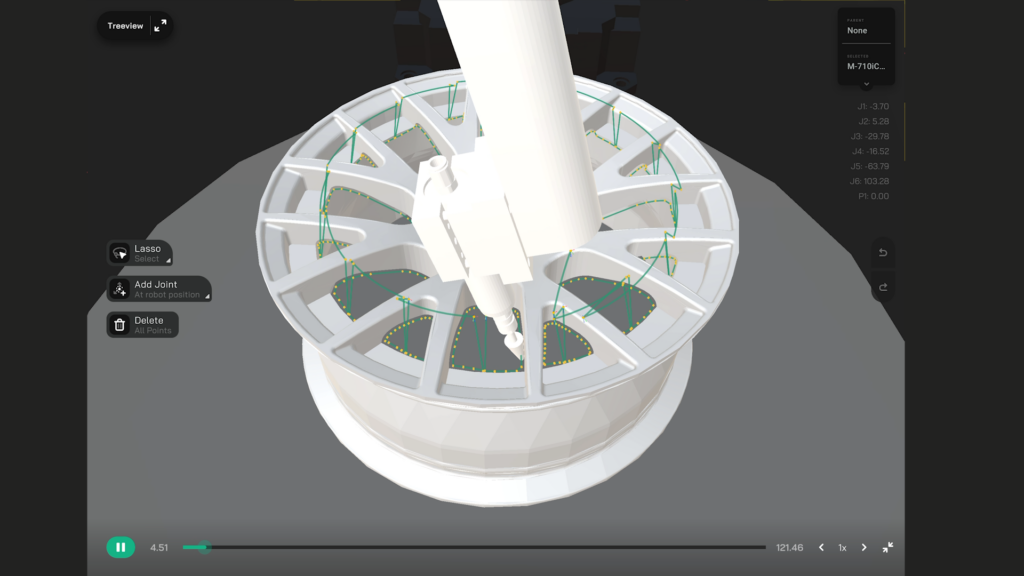
Offline Programming (OLP) lets engineers develop, simulate, and validate robot programs in a virtual environment without occupying the physical cell. The cell stays in production. The programming work moves to a desk. It's one of the bigger productivity shifts in industrial robotics over the last two decades.
How OLP actually works
The core elements:
- A digital twin of the cell — robot, fixtures, end effector, work envelope.
- A CAD model of the part being processed.
- A simulation engine that can predict robot motion, collisions, reach, and cycle time.
- An export pipeline that converts the simulated motion into controller-native code.
Done well, OLP catches problems before they reach the floor. Done poorly, the digital twin diverges from reality and the cell produces parts that don't match the simulation.
Common use cases
OLP shines on:
- Long-running production lines where the simulation investment is amortised across years of cycles.
- Multi-robot cells where coordination between arms is hard to test on the floor.
- Welding cells with complex part geometry and tight quality tolerances.
- High-volume manufacturing where any cell downtime is expensive.
The trend toward scan-driven generation
OLP's weak point has always been the digital-twin tax: keeping the model in lockstep with the real cell. The newer approach is to skip the twin entirely. Scan the part in place, generate the program from the scan, deploy. Augmentus' platform delivers this: OLP-quality outputs without the OLP maintenance overhead.