How to spray gelcoat on a boat: a step-by-step guide
Manual gelcoat application is exacting work. Here's the process, and where robots are changing it.

Gelcoat application is one of the most visible processes in boat manufacturing. The finish you see when you walk past a hull in a marina is a layer of pigmented resin laid down before the rest of the lay-up. Get it right and the boat looks new for years. Get it wrong and every flaw shows.
The manual process in brief
A spray operator works through several stages:
- Surface prep. Cleaning, masking, ensuring the mould is ready.
- Mixing. Pigments, resin, catalyst — proportions matter and timing matters.
- Application. Multiple passes with consistent thickness, angle, and overlap. Misses show.
- Cure and demoulding. Temperature and humidity affect outcome.
It's exacting work. Operators wear full protective gear, breathe in styrene-laden air, and need years of practice to get consistent results.
Why automation is changing this
The recruitment difficulty for spray operators is acute, and the work itself is hazardous. Robotic spraying is a strong fit:
- Consistent thickness across hull surfaces, even on curved or irregular geometry.
- Reduced operator exposure to styrene and overspray.
- Less waste — robots apply only what's needed and don't drift.
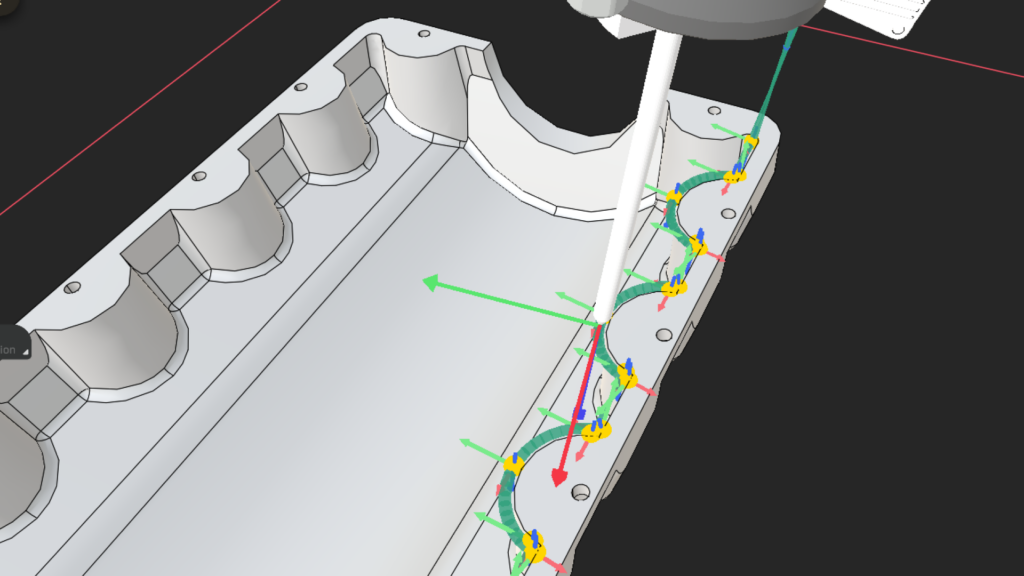
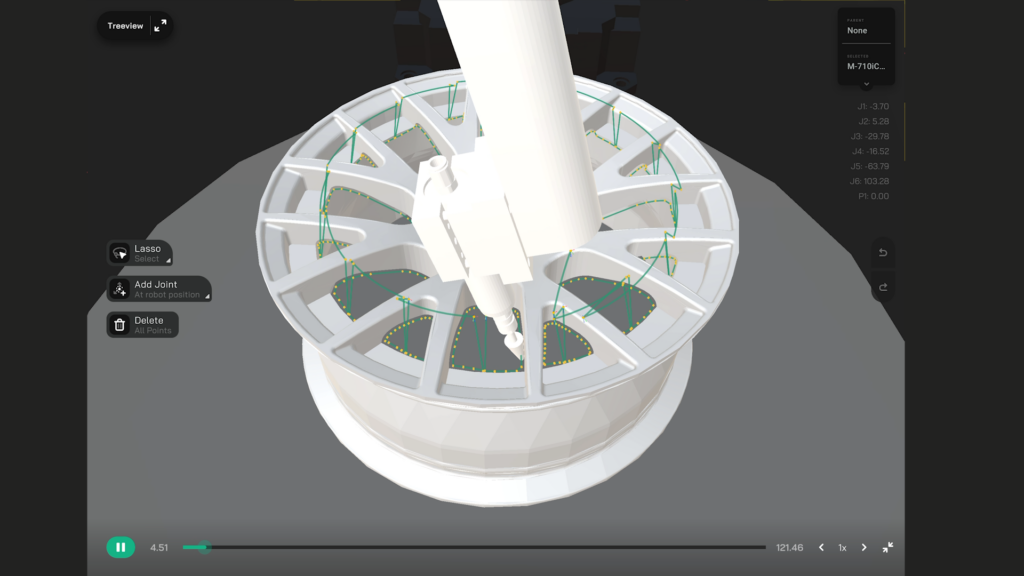
The historical challenge has been programming a robot for hulls that vary boat-to-boat. Augmentus' scan-to-path platform handles that: the cell scans the actual hull, generates the spray path, and applies the gelcoat. New hull shapes are processed without re-programming.