How robots are used in sandblasting
Robotic sandblasting takes one of manufacturing's worst environments and gets the humans out of it.

Sandblasting is one of the manufacturing processes that benefits most clearly from robotic automation. It's hazardous, repetitive, hard on operators, and increasingly difficult to staff. Every reason that argues for getting humans out of a process applies in spades to abrasive blasting.
Why blasting is hard to staff
Blasting booths are loud, dusty, and physically demanding. Operators wear full protective gear for shifts at a time, and the work itself is monotonous arm-extension labour. Recruitment and retention have been a slow-moving crisis in the industry for at least a decade.
What robotic blasting looks like
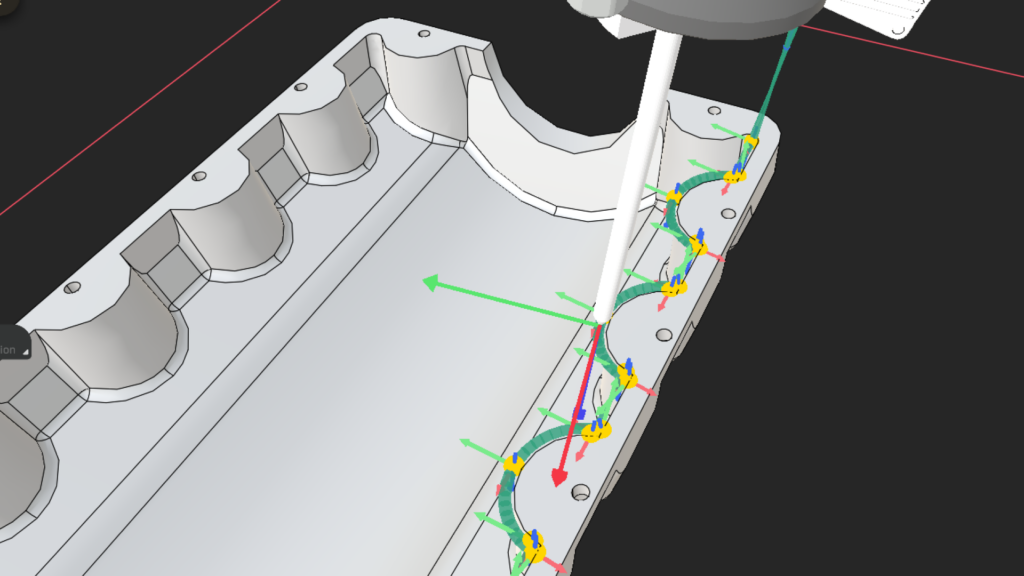
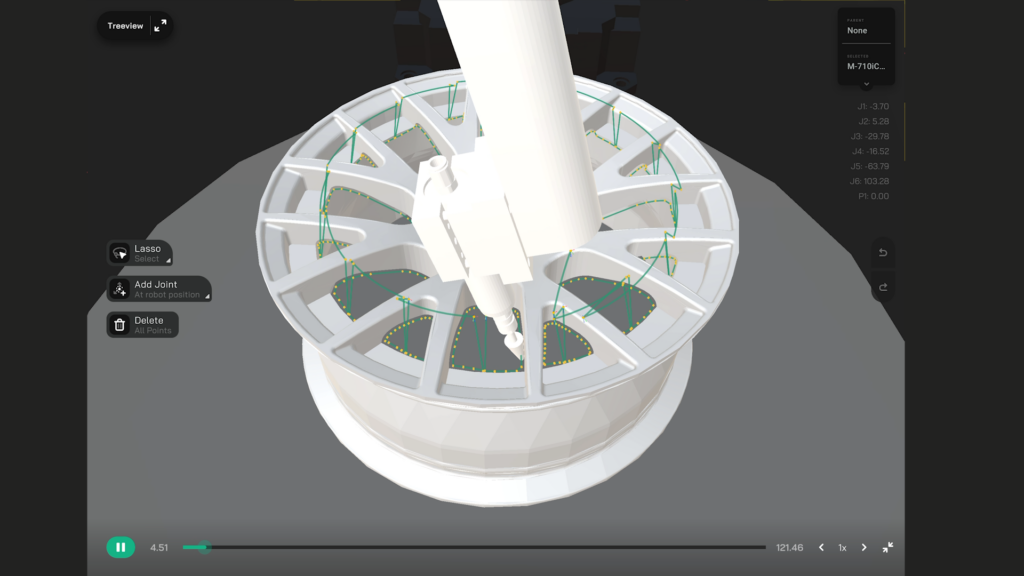
A robotic blasting cell pairs a robot — usually an industrial arm — with the blasting nozzle and abrasive feed. The robot follows a programmed path across the part, holding consistent standoff distance and angle. Two big benefits emerge:
- Consistent coverage. Humans get tired; robots don't. The hundredth part of a shift is treated the same way as the first.
- Better safety. The booth still needs containment, but humans no longer need to be inside it.
The programming hurdle
Traditional sandblasting cells have one weakness: every new part variant needs a new programmed path. For high-mix shops, that programming step has been the wall. Augmentus removes it with scan-to-path generation: the cell captures the actual geometry, generates the path, and runs. New variants are loaded and processed without engineering involvement.