Cut, weld, finish: how manufacturers are automating every step of fabrication
Eight stages of fabrication, eight places adaptive automation now reaches that it didn't five years ago.
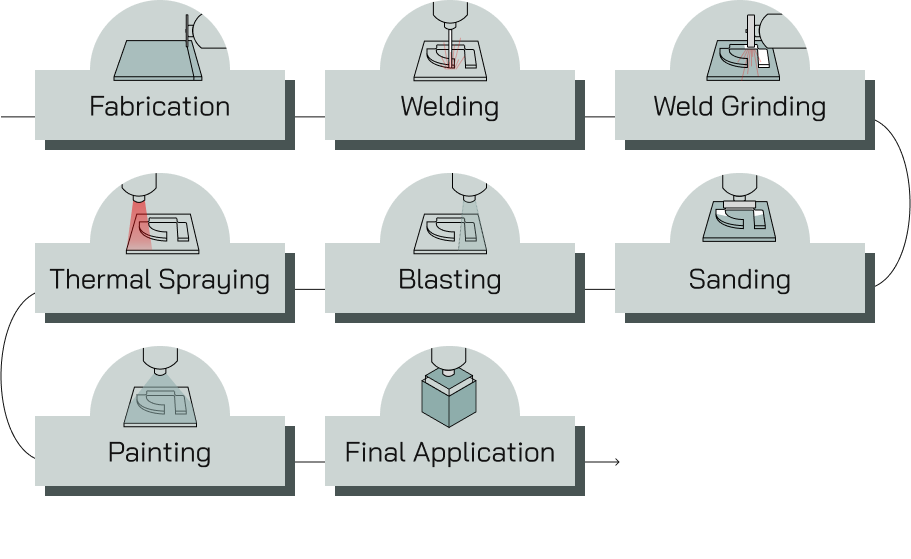
Fabrication is a sequence of steps and every step has historically resisted automation in a slightly different way. Cutting wanted programmable lasers but stalled on nesting complexity. Welding wanted articulated robots but stalled on seam variability. Finishing wanted compliant tools but stalled on the cost of programming each variant.
The last five years have changed what's reachable. This paper walks through eight stages of fabrication and where adaptive automation now wins — and where it still struggles.
Where automation now reaches
Cutting. Modern fibre lasers paired with nesting software handle high-mix sheet work routinely. The remaining hard problem is large-scale 3D cutting on weldments and castings.
Forming. Press brakes with on-line angle correction close the loop on springback. The remaining hard problem is hot forming where material properties drift mid-cycle.
Welding. Scan-driven seam finding plus in-process seam tracking now make robotic welding viable for batches of one — the historic threshold where teach-pendant economics collapse.
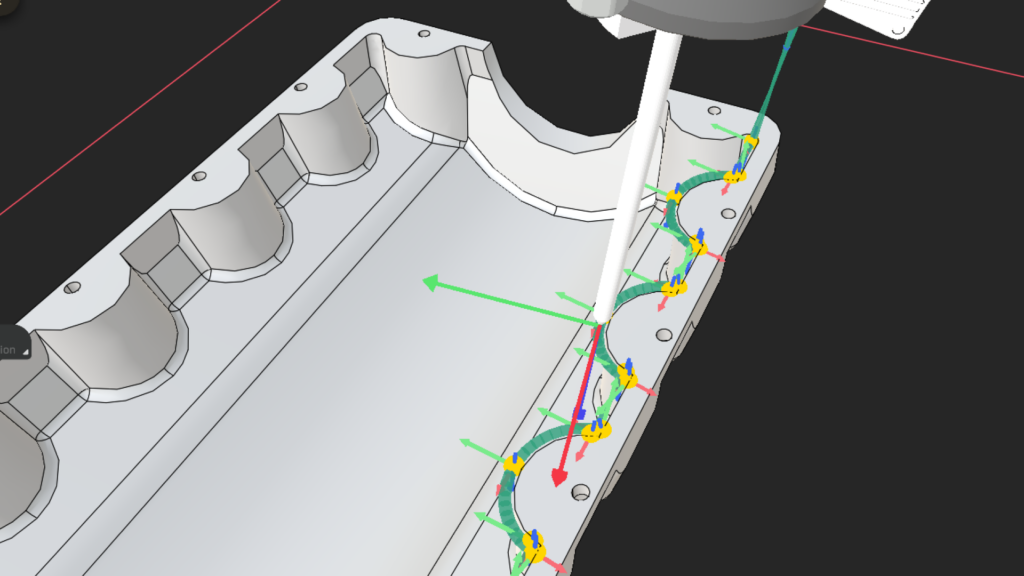
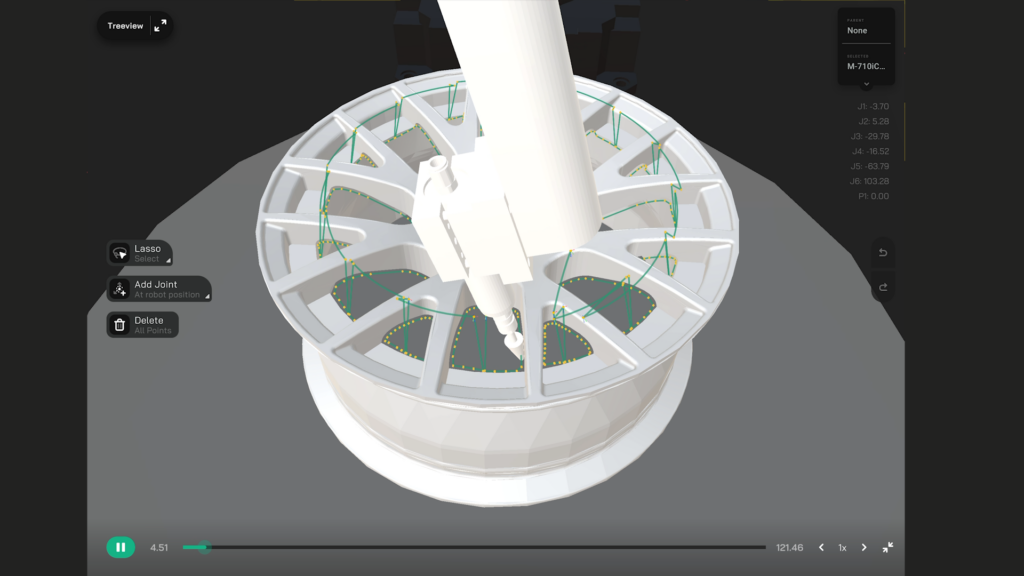
Finishing. Adaptive sanding, polishing, and deburring on scanned geometry are now production-ready for cell sizes where fixturing every variant would be uneconomic.
Coating. Powder, paint, and thermal-spray coating workflows have moved from teach-pendant to scan-to-path generation, compressing per-SKU onboarding from days to minutes.
Where the holes still are
Two stages are still difficult to automate at high mix:
Inspection. The sensor stack is there, the workflow is not. Most cells still relegate inspection to a separate downstream operation, which loses the latency advantage of in-process correction.
Assembly. Adaptive assembly remains the hardest of all because the variation isn't in one part — it's in the interaction between two or more parts. Force-controlled compliance helps; vision-guided pick-and-place helps; but the general case is not yet solved.
What it adds up to
For most fabricators today, the question isn't whether to automate — it's where to start. The right answer is usually the stage in your shop that's currently consuming the most programmer-hours per dollar of throughput. For high-mix shops, that's most often the welding or finishing step.
To work through your specific stages, schedule a demo.