Collaborative robots vs industrial robots: choosing the right fit
Cobots and traditional industrial robots address different problems — here's how to pick.

The cobot conversation gets louder every year. Universal Robots, Doosan, and FANUC's CRX line have brought collaborative arms into shops that wouldn't have considered automation a decade ago. But the headline numbers can mislead: traditional industrial robots still account for the overwhelming majority of robotic work being done in manufacturing today.
The functional split
The key differences in plain terms:
- Speed and payload. Industrial robots are faster, stronger, and built for sustained duty cycles. Cobots trade those for safety features that let them work near humans.
- Safety perimeter. Cobots can operate in shared workspaces without fencing. Industrial robots typically need full enclosures.
- Deployment time. Cobots are easier to bolt down and start using. Industrial robots reward more engineering up front but often pay back more across volume.
- Cost envelope. Cobots cluster around a lower price point. Industrial robots scale higher but earn back through throughput.
Which one fits the job?
A useful heuristic:
- High volume, predictable parts, no operator nearby → industrial robot.
- Low-to-medium volume, frequent variant changes, shared workspace → cobot.
- High-mix work where programming time is the bottleneck → either, paired with a no-code platform that removes the programming step.
What Augmentus changes
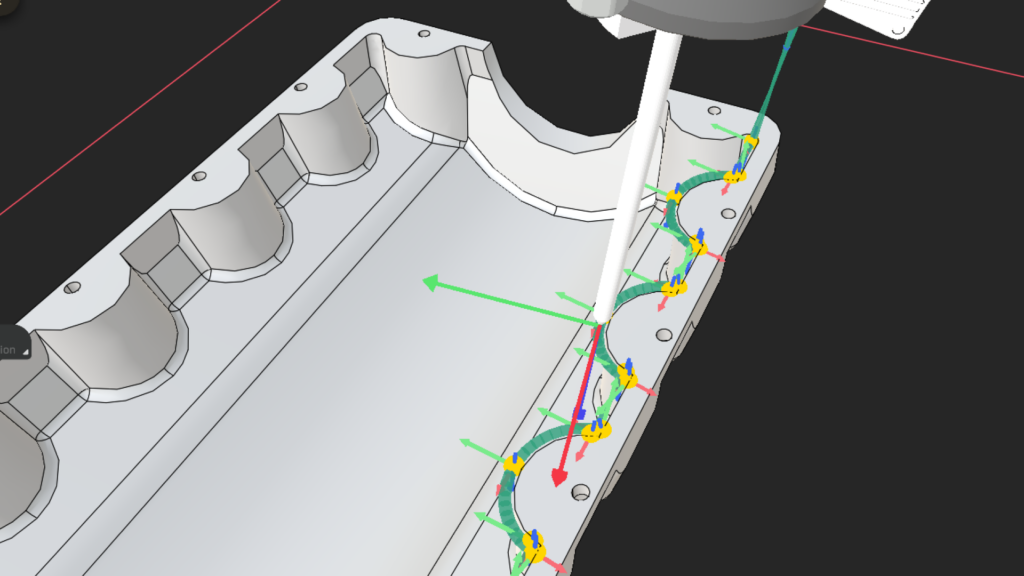
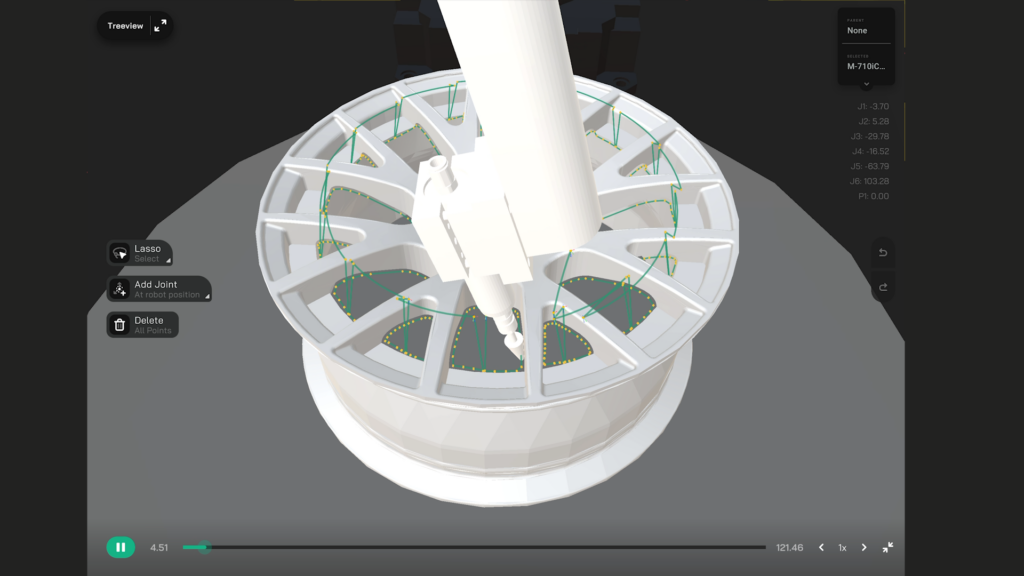
Both classes share one constraint: programming time. Augmentus runs on both — UR, Doosan, FANUC CRX on the cobot side, and the full set of ABB, KUKA, FANUC, and Yaskawa industrial arms. The choice between cobot and industrial becomes a process decision, not a tooling decision.