Clearing the air: seam tracking and seam finding
Two often-conflated welding capabilities — what each does, where each fails, and when you need both.
Operators new to robotic welding often use seam finding and seam tracking interchangeably. They're related but distinct, and conflating them leads to cells that solve the wrong half of the problem. This paper unpacks each, where each fails on its own, and how they work together in a high-mix robotic welding cell.
Seam finding
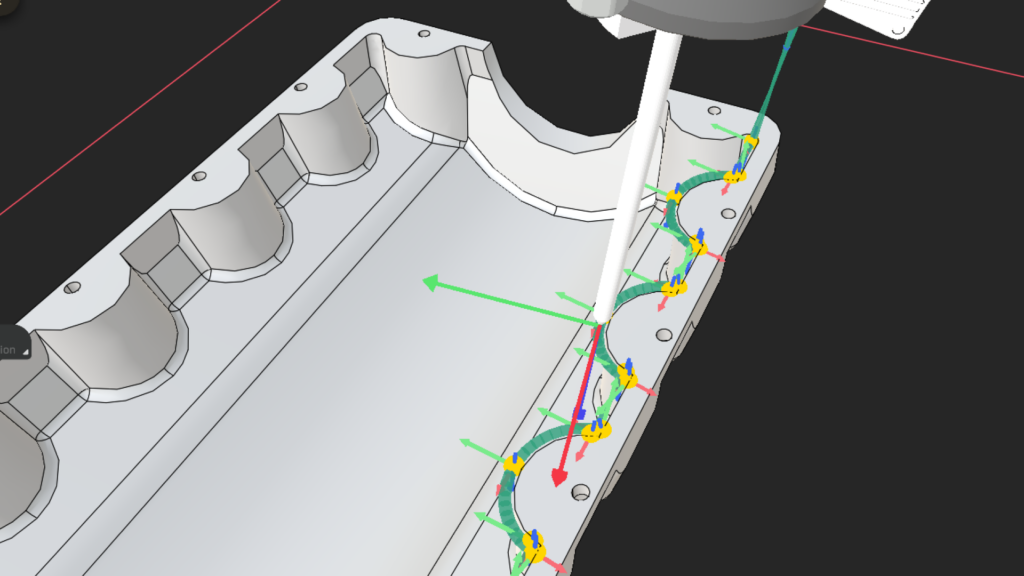
Seam finding happens before the arc strikes. The robot uses a sensor — touch, laser, or vision — to locate the actual weld joint on the part in front of it, compensating for fixture drift, part variation, and any other reason the part isn't exactly where the program expected.
It's a deterministic, one-shot correction: scan, find, offset the entire weld plan. Without it, every weld starts with a hope and a prayer that the part is fixtured perfectly. With it, the weld starts at the right place even if the casting drifted half a millimetre.
Seam tracking
Seam tracking happens during the weld. As the torch moves along the joint, a sensor (typically a laser line scanner or through-arc sensing) watches the weld pool position and steers the torch in real time. Tracking compensates for joint deviation along the weld, distortion under heat, and small in-plane corrections that finding couldn't predict.
Tracking is the closed-loop component. Without it, a weld that starts perfectly aligned still drifts as heat distorts the part.
When you need both
For low-mix, high-volume welding (automotive body, structural beams), tight fixturing often eliminates the need for either. For high-mix work — weldments with batch-to-batch variation, repair welds on used parts, large structures that distort under their own welding heat — both finding and tracking earn their cost. Finding handles the initial location problem; tracking handles the during-weld drift.
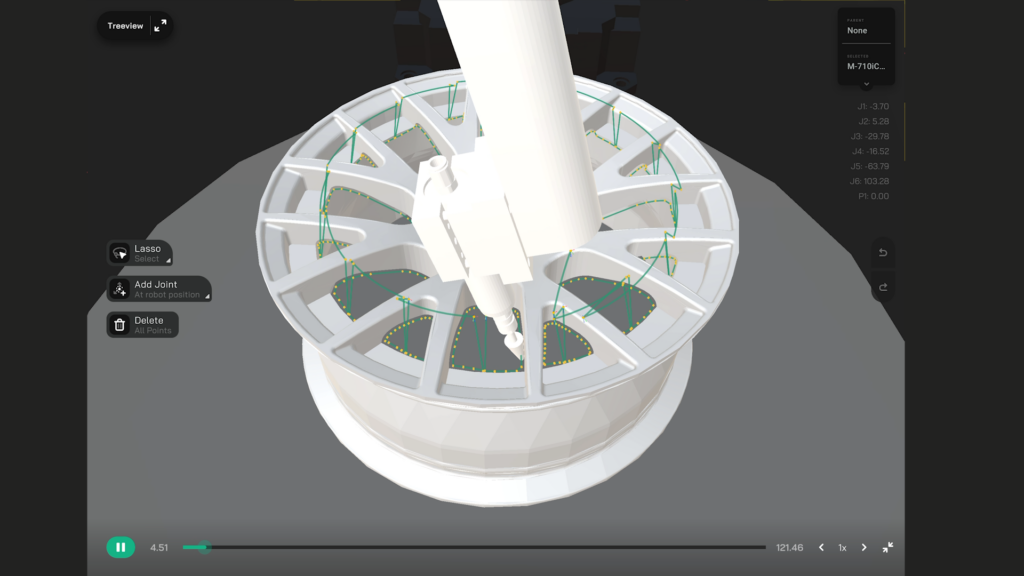
Augmentus' welding workflow combines both into a single recipe: scan-driven finding before the weld starts, optional in-process tracking during execution. The recipe lives at the process level so changing a SKU doesn't mean reconfiguring sensor logic.
If you'd like to evaluate this on your welding parts, schedule a demo.