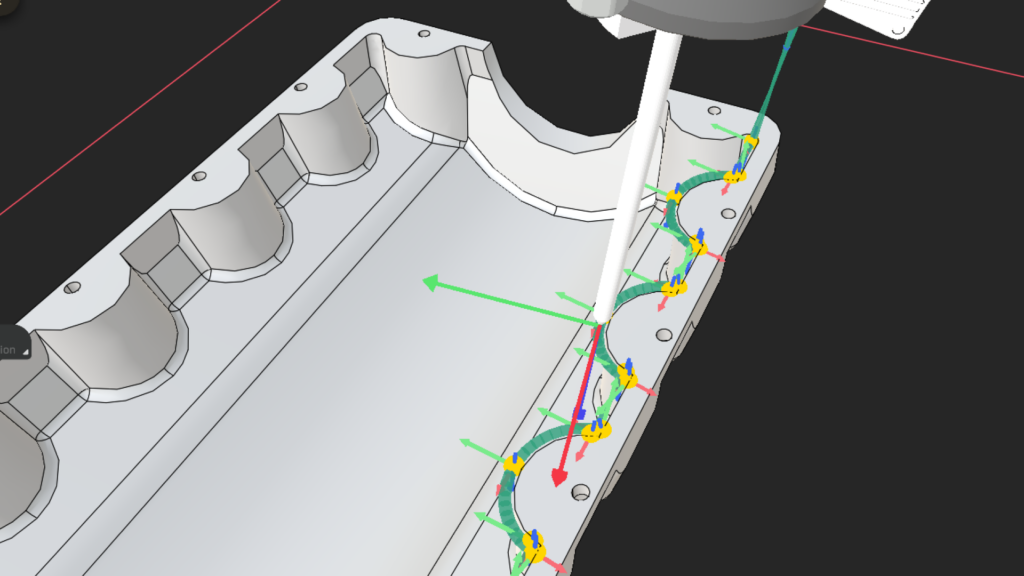
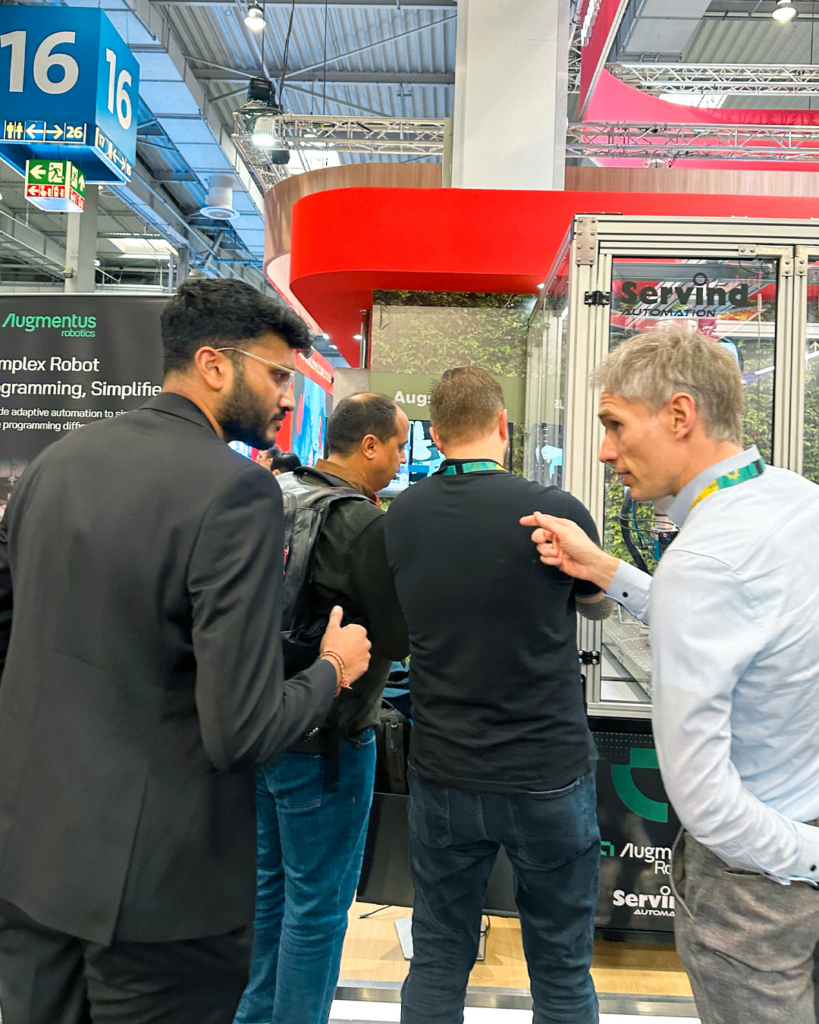
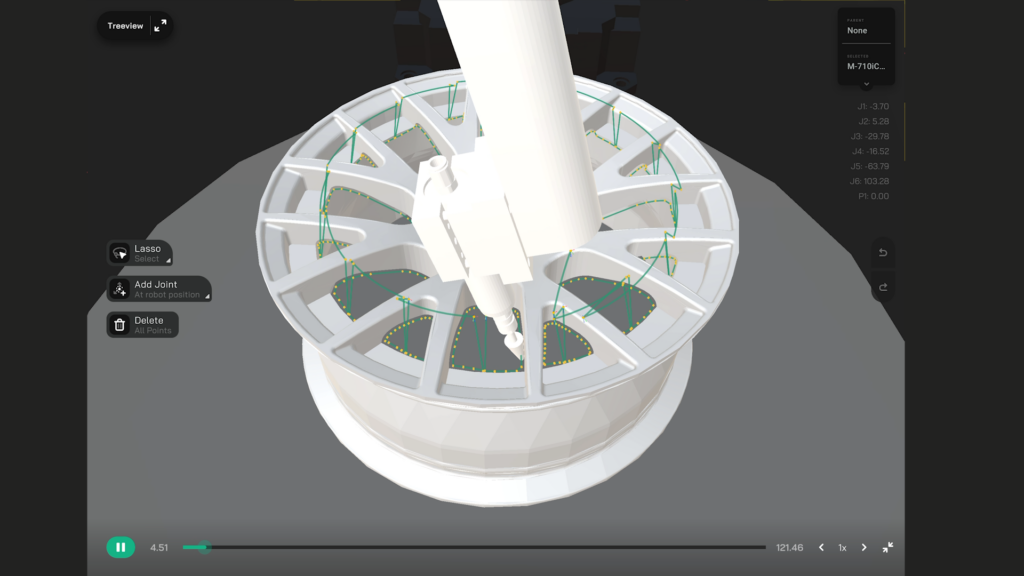
Automation robotics with offline programming capabilities
Why OLP is winning over teach-pendant programming — and where it falls short.

Offline programming (OLP) is one of the quiet revolutions in industrial robotics. By moving the programming step into a software environment — separate from the physical cell — manufacturers can keep their robots producing while engineers prepare the next variant. The cell stops less, and engineers iterate faster.
What OLP brings to the floor
The headline benefits:
- Cell uptime improves. Programming no longer requires stopping the robot.
- Cycle time can be optimised in simulation before the robot ever moves.
- Collisions and reach issues are caught in software rather than on the floor.
- ROI on the cell improves because more of its time is spent making parts.
For long-running production lines with stable part geometries, OLP is hard to beat.
Where OLP runs out of room
The challenge with OLP is the digital twin tax. The simulated cell has to match the real cell precisely — every fixture, every tool offset, every robot quirk. Setting that up is expensive, and the moment something drifts in the real world, the simulation lies.
For high-mix work, OLP is also vulnerable to programming volume. If you have hundreds of variants, you have hundreds of OLP programs to maintain.
The next-generation approach is scan-driven: capture the real part in 3D, generate the program from the captured geometry, and deploy. There is no digital twin to maintain because the model is rebuilt every cycle. This is what Augmentus delivers.