Automating high-mix valve powder coating — 93% less robot downtime
How a relief-valve manufacturer cut programming from days to minutes using Augmentus' scan-to-path.
Relief valves are a textbook high-mix part. A single line might see dozens of SKUs in a week — different body sizes, different inlet geometries, different masking patterns. For the manufacturer in this study, traditional teach-pendant programming was eating five working days per SKU before the robot could spray a single part.
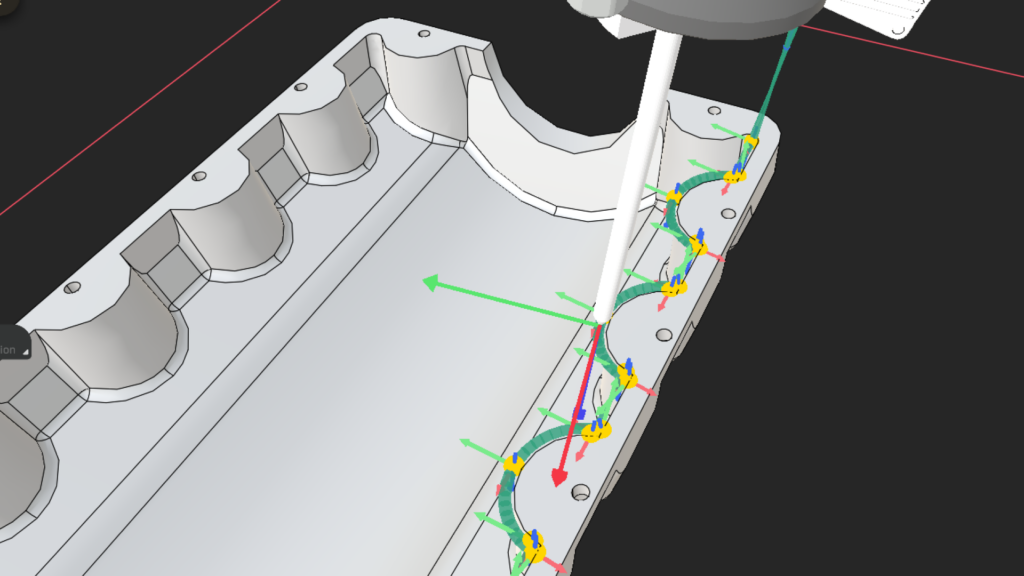
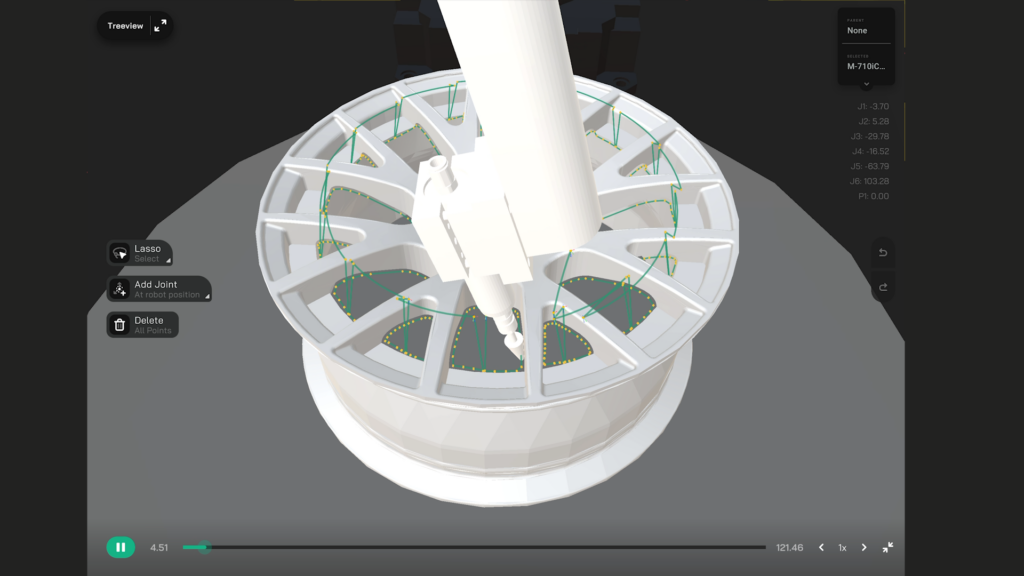
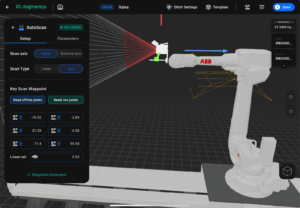
The new line uses Augmentus' scan-to-path workflow. An Augmentus Vision scanner captures the valve in its fixture; the platform generates a powder-coating toolpath that respects standoff, atomiser angle, and recipe coverage; the operator reviews and executes — all in under an hour, on parts that previously took a full week.
The bottleneck wasn't the robot
What this customer discovered is what most high-mix shops eventually discover: the robot wasn't the slow part of the cell. The bottleneck was the human-driven loop of teaching, simulating, correcting, and re-teaching every time a new SKU came through. Removing that loop didn't just reduce programming time — it changed which parts could economically be coated on the line at all.
Coverage uniformity improved too. Because the toolpath is generated from the actual scanned geometry rather than a nominal CAD assumption, the spray pattern lines up with what the part really looks like after casting and machining variation.
What it costs to not do this
A 93% reduction in programming-driven downtime translates directly to either more SKUs through the same cell or fewer cells to support the same SKU mix. For powder-coating lines with constrained floor space, the second is usually more valuable.
Curious what this looks like on your valve geometries? Schedule a demo.