Automated thermal spraying for bent pipes — faster programming with AutoPath
How AutoPath generates collision-free thermal-spray toolpaths on curved pipe geometries in minutes.
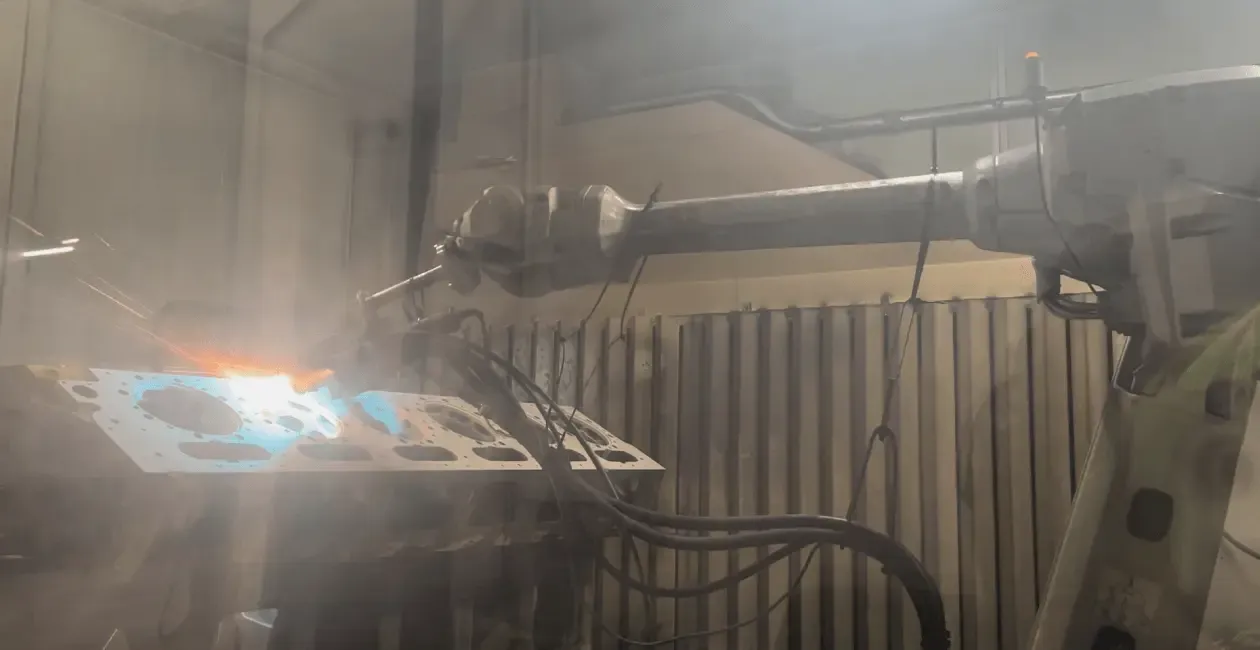
Bent pipes are notoriously hard to program for thermal spray. The toolpath has to maintain consistent standoff and impingement angle as the part curves through three-dimensional space, and the slightest deviation from intended geometry — bend angle out of tolerance, wall thickness varying along the run — turns a programmed path into a series of near-misses.
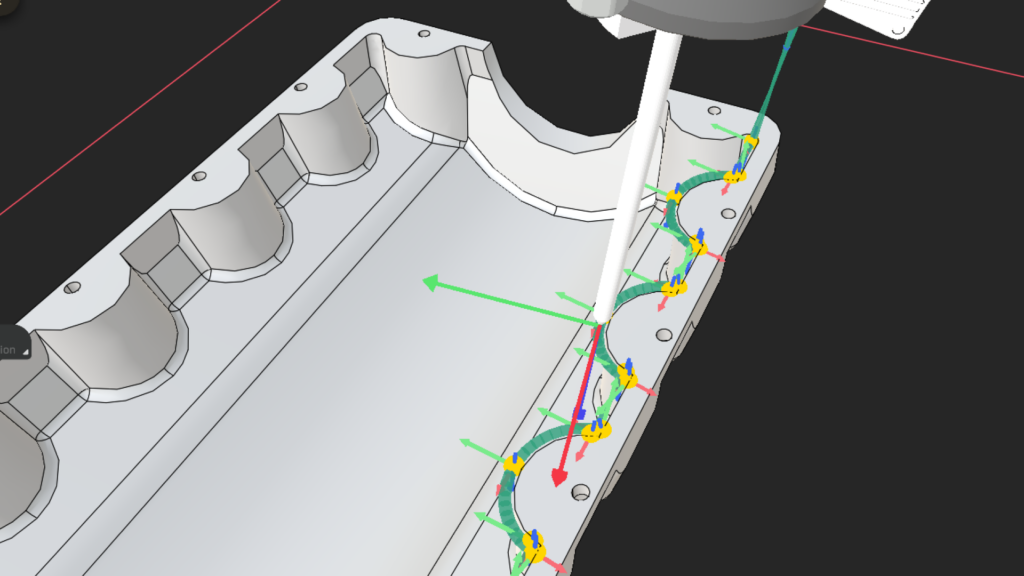
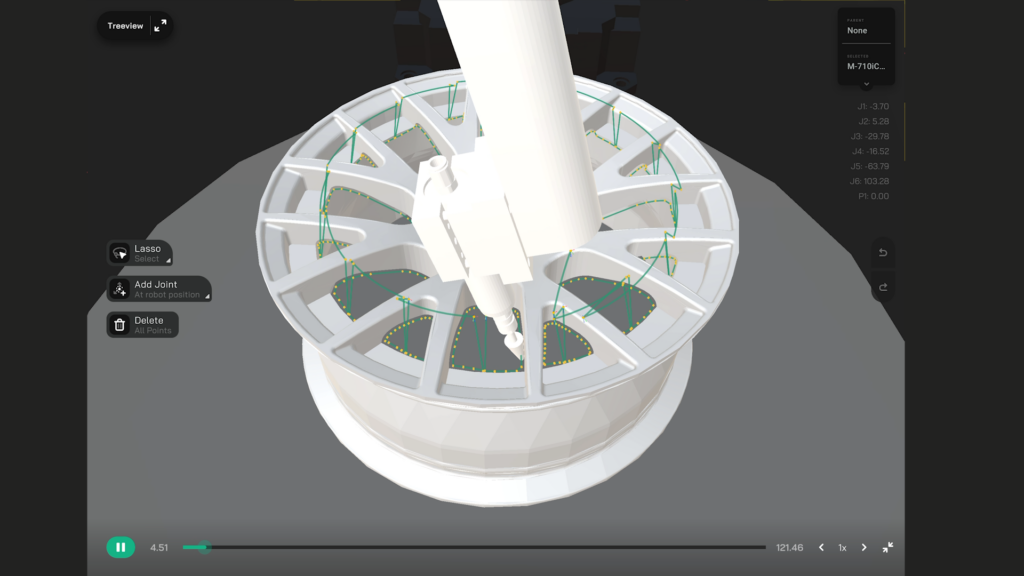
AutoPath collapses the programming step. The pipe is scanned with an Augmentus Vision sensor, a coverage-aware spray pattern is generated against the actual reconstructed mesh, and the resulting motion respects every process constraint operators care about — TCP velocity, standoff, blending radii — without anyone touching a teach pendant.
Why per-pipe programming doesn't scale
A typical MRO or process-plant cell sees dozens of pipe variants over a year. Each variant historically meant a full programming pass: model the pipe in OLP software, simulate, transfer, re-teach on the real fixture, re-spray a test part, iterate. Even efficient teams measure this in days per SKU.
The AutoPath workflow runs end-to-end in minutes. Coverage uniformity also improves because the toolpath is generated from the as-built pipe, not a nominal CAD model that diverges from physical reality the moment the pipe leaves bending.
Where it pays off
Shops with high pipe-SKU variety see the biggest gains. The savings aren't just cycle-time — they're the ability to take on smaller-volume coating work that was previously uneconomic to program.
Curious what this looks like on your pipe geometries? Schedule a demo.