Aerospace MRO: how robots are transforming maintenance, repair, and operations
Why MRO workflows benefit disproportionately from adaptive robotic automation.

Maintenance, repair, and operations (MRO) is the unglamorous backbone of every aerospace operation. Components don't fail on a fixed schedule, parts are rarely identical to the day they left the factory, and every repair has to certify back to airworthiness standards. It is, in other words, the worst-case scenario for traditional industrial automation — and exactly where adaptive robotics is starting to win.
Why MRO breaks open-loop robotics
Traditional industrial cells assume the part is in a known location and matches a known geometry. MRO turns both of those assumptions inside out:
- Parts arrive worn, deformed, or already repaired once before.
- Fixturing has to accommodate one-off geometries instead of a steady-state production line.
- Surface finishing, coating, or weld repair must follow the actual part, not a CAD ideal.
Open-loop teach-pendant programs simply can't keep up. Every incoming part would need a custom program written from scratch — labour the industry doesn't have.
What adaptive automation unlocks
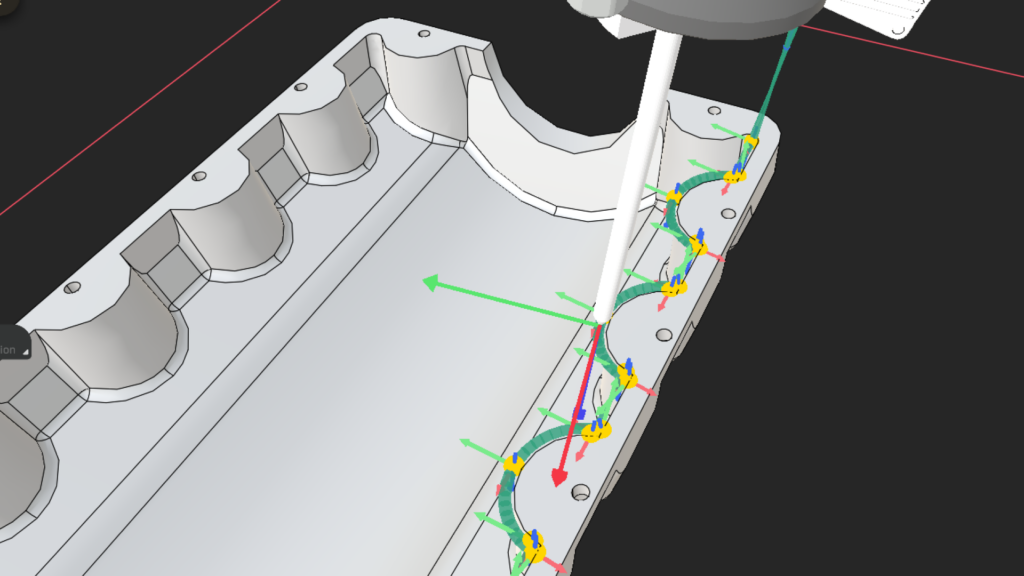
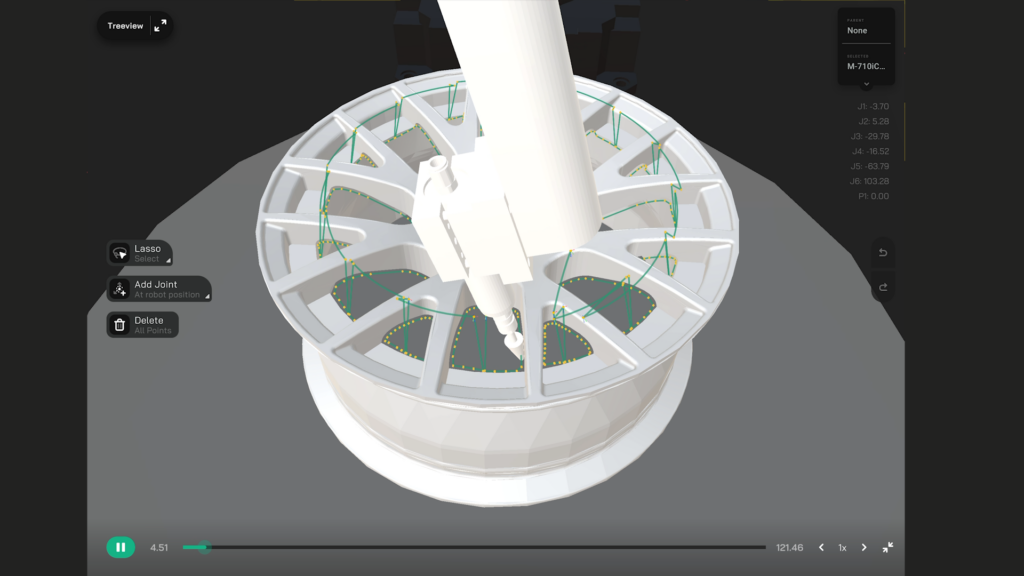
The newer generation of robotic platforms scan the part in place and generate the toolpath from the real geometry. That single change collapses days of programming into minutes. Augmentus, for example, uses 3D scanning combined with no-code recipe selection to generate process-ready paths for surface finishing, blasting, and coating tasks on aerospace components.
The downstream effect is that an MRO facility can take in mixed jobs without scheduling them around programming bottlenecks. Capacity is governed by the cell, not the engineer.